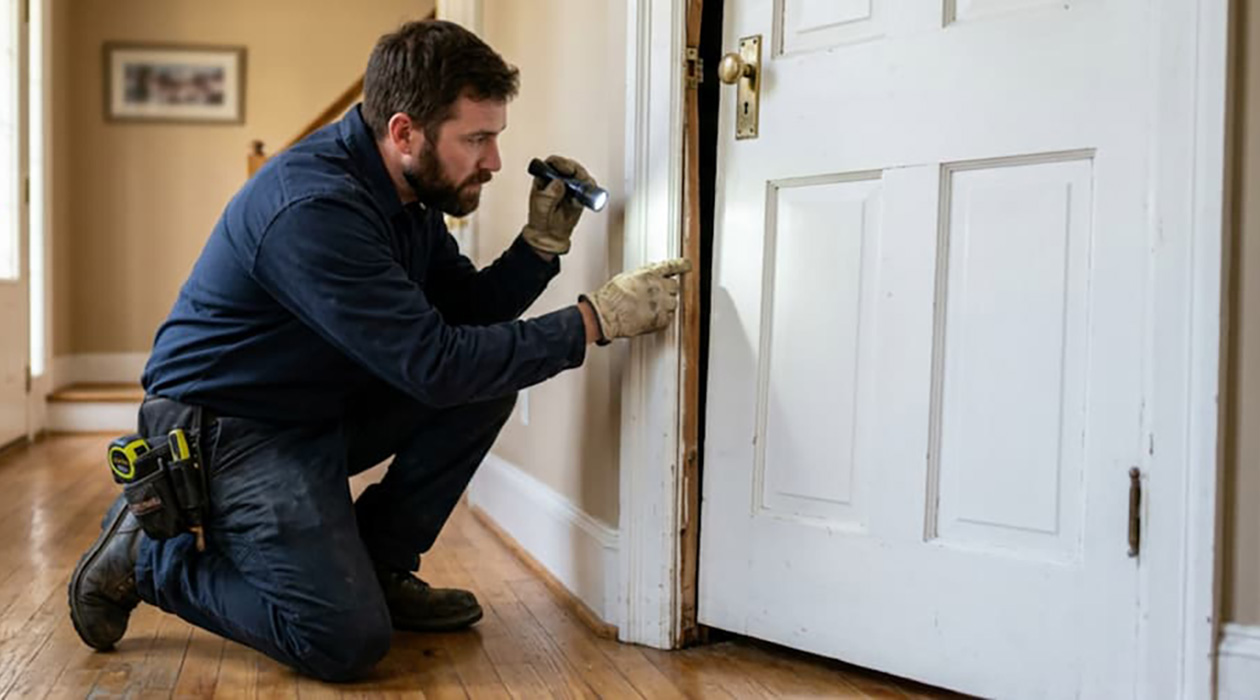

Why Doors and Windows Stick in Wichita Homes
Many Wichita homeowners assume sticking doors and windows are a minor inconvenience, something to fix with a quick adjustment or a fresh coat of paint. That is true sometimes. But in other cases, a door that drags or a window that no longer closes flush is one of the first things a homeowner notices when the foundation beneath the home has started to move.
Door frames and window openings are rigid rectangles built into a structure that moves. When the foundation shifts, those openings go slightly out of square, and that is when the dragging and the gaps show up. Knowing the difference between a wood problem and a soil problem is what determines whether you need a carpenter or a foundation inspection.
Key Takeaways
- A door that drags or won't latch is often the first visible sign of foundation movement, not a carpentry problem.
- Wichita's clay soil expands when wet and shrinks in dry heat. That back-and-forth is what pushes foundations out of level over the years.
- Sticking that moves around the house, gets worse each year, or shows up alongside cracks deserves a closer look, not a seasonal adjustment.
- Foundation problems caught early cost less to fix. The longer it goes, the bigger the job gets.
The Connection Between Foundation Movement and Sticking Doors
A door frame is a fixed rectangle built into the wall. When the foundation under that wall shifts even a little, the rectangle goes slightly out of shape. The door still fits the original opening in the door itself, but not the opening in the wall anymore. That is why it drags, or why the latch no longer lines up.
This is not a door problem. It is a sign of what is happening below floor level. Windows work the same way. The opening changed shape, not the window.
In Wichita, this happens more than most homeowners expect, and the reason is what is in the ground.
How Kansas Clay Soil Affects Wichita Foundations
The ground under most Wichita homes is heavy clay. Clay does one thing really well: it soaks up water and swells, then dries out and shrinks back. That happens every single year, and the foundation sits right in the middle of it.
Wichita gets about 36 inches of rain a year, but it does not come in evenly. June alone can drop over four inches. Then late summer hits, things dry out fast, and all that moisture leaves the ground in a hurry. The soil swells, then pulls back, then swells again. After enough years of that, foundations move. Not dramatically, not all at once. Just enough to push a door frame slightly out of square. Homes on slab foundations tend to feel this sooner, and crawl spaces that are not sealed right let moisture reach the soil unevenly, which makes the movement worse in certain spots than others.
Seasonal Patterns in Wichita That Make Sticking Worse
Spring and Early Summer
Spring rains saturate the clay, causing it to swell. Doors get harder to open in late spring as the ground pushes upward. Windows develop resistance too. It can feel like a humidity issue, and occasionally it is. But when the same doors stick every spring, the real cause is almost always the foundation, not the weather.
Late Summer and Fall
When Wichita dries out, the clay pulls back and voids open up beneath the foundation. A door that was sticking in May may swing freely by August, while a different door across the house starts catching. That shifting pattern is the tell. It means the foundation is moving, not that the wood is swelling and shrinking with the air.
Signs That Sticking Doors May Indicate a Foundation Issue in Your Wichita Home
Windows tend to show movement before doors do. They sit higher in the wall, where frame distortion becomes visible sooner. A window that used to slide smoothly and now requires a shove, leaves a gap on one side, or has developed small cracks at the corners is responding to the same shift that affects the doors below. It is worth paying attention to both.
Not every door or window that sticks points to a foundation problem. But these patterns are harder to explain away:
- Multiple doors or windows in different parts of the house sticking at the same time
- Sticking that gets noticeably worse from one year to the next, not just in summer
- Visible gaps between the door frame and the surrounding wall
Cracks at the corners of frames are also worth noting. They tend to form diagonally, starting at the top corner of a door or window opening, and they usually show up on the side of the frame that is taking the most stress from the shift. If the floors near those openings feel slightly off, or if the sticking started right after a stretch of heavy rain or a long dry spell, those details matter.
One sticking door in July is not a red flag. But when it keeps happening in different spots, or shows up alongside wall cracks and uneven floors, it is worth getting eyes on the foundation. Our article on What Foundation Cracks Really Mean in Wichita Homes covers what those additional signs can tell you.
Other Structural Signs That Often Accompany Sticking Doors
Foundation movement rarely stops at one door. Diagonal cracks at the corners of window or door frames are common, and so are stair-step cracks in exterior brick. Those two show up together more often than not. Also look for a gap forming between the wall and ceiling, which is easy to miss until it is wide enough to see from across the room.
Floors that slope or feel soft in certain spots, and baseboards pulling away from the floor, round out what most inspectors see when sticking doors turn out to be a foundation issue. Any one of these on its own might not mean much. Several of them together tells a clearer story. When that is what you are seeing, a foundation repair evaluation is the right call.
How Early Action Reduces Foundation Repair Costs in Wichita
A sticking door is one of the earlier signs. By the time it shows up, there has usually been some movement going on beneath the house for a while already. The good news is that catching it here, before it turns into cracked walls and sloping floors, usually means a smaller job. Wait long enough and it becomes a much bigger one.
Depending on what an inspection finds, the fix might be as straightforward as improving drainage around the foundation to keep water from pooling against it, or waterproofing cracks before moisture gets further in. In spots where the ground has already dropped, piers can be driven down to stable soil to stop the movement. And if the crawl space is letting moisture reach the ground unevenly, sealing it properly makes a real difference. Most homeowners are surprised the options are still that manageable at this stage.
Because sticking doors tend to get worse through Wichita's wet-dry cycles, the seasonal article on how Wichita's climate affects foundations year-round is worth reading alongside this one.
FREQUENTLY ASKED QUESTIONS
Do all sticking doors mean there is a foundation problem?
Not always. Humidity and wood expansion cause sticking too, especially in older homes. The difference is pattern. One door sticking in summer is usually not a concern. Multiple doors in different rooms, sticking that gets worse each year, or sticking alongside visible cracks is worth having looked at.
How quickly does foundation movement cause door problems in Wichita?
It varies. Minor seasonal soil movement can cause temporary sticking that goes away on its own. More serious settlement builds slowly over months or years, and by the time it becomes noticeable in door frames, the movement has usually been happening for a while.
Can I just plane the door and call it fixed?
If the foundation is moving, the door will stick again.
Is sticking more common in older Wichita homes?
Older homes have had more years of soil movement to accumulate, so symptoms tend to be more visible. That said, newer homes in areas with heavy clay soil and poor drainage can show the same signs within a few years of construction.
Should I wait and see if it gets better on its own?
If it is one door in the summer, watching it through the season is reasonable. If it is spreading to other doors or windows, or you are also seeing cracks or uneven floors, waiting tends to make the eventual repair more involved, not less.
When to Consult a Professional in Wichita
If it is just one door acting up in July, that might be nothing. But if it is spreading to other spots, getting worse year over year, or showing up alongside cracks or uneven floors, do not keep adjusting the door. Get the foundation looked at.
Chief Cornerstone Foundation has worked with Wichita homeowners through enough Kansas summers and wet springs to know what soil movement looks like from the inside of a home. If what you are describing matches what is in this article, a visual inspection of the foundation is the fastest way to know for sure. Schedule an inspection with our Wichita foundation repair team or call us at (316) 365-0032.
Already Noticing This in Your Wichita Home? Here Is What to Do
If you are already dealing with a door that catches, a window that stopped sealing properly, or a combination of small things that seem unrelated, the best move is to have the foundation looked at before adjusting anything else. A quick inspection either rules out a foundation issue or identifies it early, when repair options are still straightforward. Either outcome is better than waiting another season to find out.
GET YOUR FREE ESTIMATE

Initial Consultation
A foundation repair specialist will visit your home to assess the damage, listen to your concerns, and recommend the best solution for your foundation issues.
Purpose: Identify the root cause of the problem (e.g., cracks, settling, or water damage) and discuss repair options.

Detailed Assessment and Measurement
An expert will conduct a thorough inspection, taking precise measurements of the foundation and surrounding areas to determine the extent of the damage and plan the repair.
Purpose: Gather data to create a customized repair plan, such as identifying how much the foundation has shifted or where piers need to be installed.

Ongoing Communication
The repair team will keep you updated with regular communication throughout the process, ensuring you’re informed about timelines, progress, and any adjustments needed.
Purpose: Maintain transparency so you know what to expect during the repair, such as scheduling or potential challenges like weather delays.

Foundation Repair Execution
The team will perform the necessary repairs, such as installing piers, leveling the foundation, or sealing cracks, with careful attention to your home’s structure and safety.
Purpose: Execute the repair plan efficiently, ensuring minimal disruption to your property while addressing the foundation issues.

Quality Inspection and Assurance
After the repairs are complete, a foundation repair manager will inspect the work with you to ensure the foundation is stable, level, and meets your expectations before finalizing the project.