
Crawl Space Encapsulation in Wichita: What Homeowners Need to Know

Most of the air in your home right now came from the crawl space.

That is not a fun fact. It means whatever is happening under your floors, moisture, mold spores, musty air, is making its way up into the rooms where your family lives. In Wichita, where wet springs and dry summers put the soil through a constant cycle of expansion and contraction, crawl spaces take a beating. And most homeowners have no idea what is going on down there until they start smelling it or feeling it in the floors.

Crawl space encapsulation is the most complete way to cut that cycle off. This article explains what it actually involves, why Wichita homes need it more than most, and how to tell if your crawl space has gotten to the point where waiting is making things worse.

Key Takeaways

  • Crawl spaces pull air upward into your living space. If the crawl space has a moisture problem, your home does too.
  • Wichita's clay soil holds moisture against the foundation longer than most soil types, making unprotected crawl spaces especially vulnerable here.
  • Encapsulation means sealing the crawl space completely, walls, floor, and vents, so outside air and ground moisture cannot get in.
  • A vapor barrier alone is not encapsulation. Real encapsulation seals the full space and often includes a dehumidifier to manage the air inside.
  • Musty smells, soft floors, and higher-than-normal energy bills are common signs it is time to have the crawl space looked at.

What Crawl Space Encapsulation Actually Is

A lot of homeowners hear "encapsulation" and picture a thin sheet of plastic on the ground. That is a vapor barrier, and it helps, but it is not the same thing.

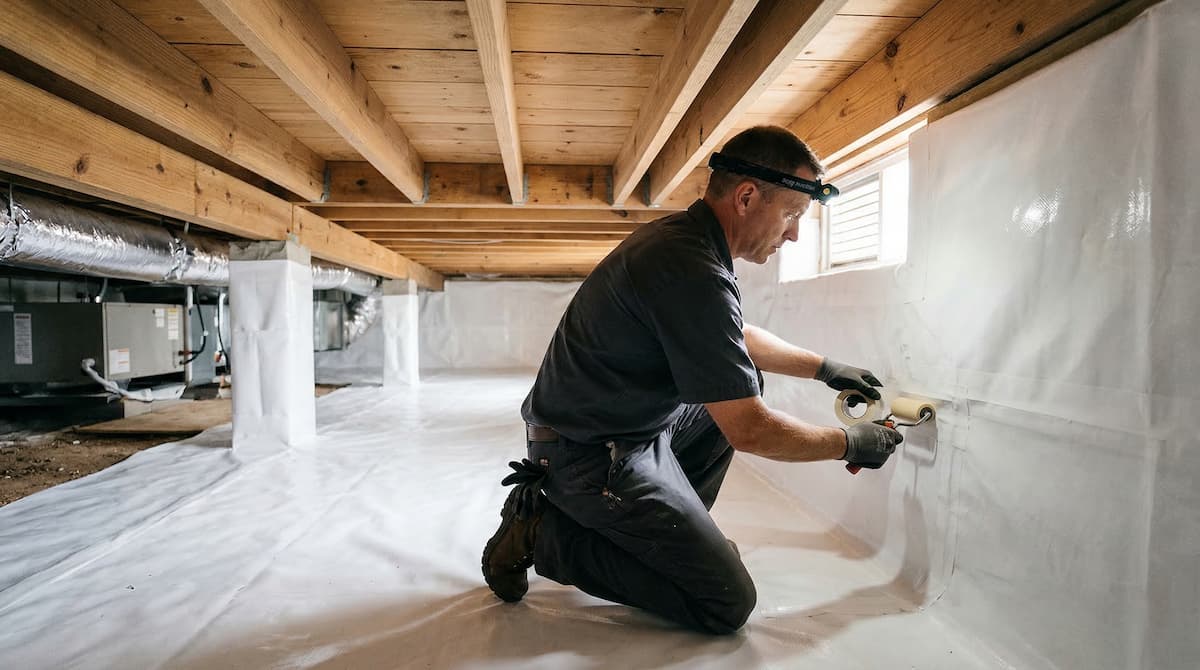
Full encapsulation means treating the crawl space as a sealed zone. The floor gets covered in a heavy-duty liner, typically 12 to 20 mil thick. The walls get lined too. The vents that were meant to let air circulate get sealed, because in practice those vents let in humid outside air that makes the moisture problem worse, not better. A dehumidifier is usually installed to keep the air inside the sealed space stable.

Before the liner goes in, any standing water or drainage issues have to be dealt with. You cannot encapsulate over a wet crawl space and expect it to work. The sequence matters: fix the water source, repair any damaged wood, then seal. Done in the right order, encapsulation transforms what was an open, uncontrolled space into something closer to a conditioned part of the house.

The goal is simple: nothing gets in from the outside and nothing seeps up from the soil. What used to be an unpredictable environment under your home becomes a dry, stable one that you do not have to think about every spring.

Why Wichita Crawl Spaces Are Especially Vulnerable

The ground under most Wichita homes is heavy clay, and clay holds water. When it rains, the soil around a crawl space saturates slowly and releases that moisture just as slowly. It does not drain away the way it would in sandier soil. It sits there, pressing against the foundation walls and evaporating upward into the crawl space air for weeks after a storm.

Wichita gets about 36 inches of rain a year, with June regularly bringing over four inches in a single month. That wet spring followed by a hot, dry summer is exactly the pattern that keeps crawl spaces in a constant cycle of moisture in, moisture out. The soil swells and pulls back, the air under the house swings between damp and dry, and materials like wood joists and beams absorb that change year after year.

On top of that, Wichita's average annual relative humidity sits around 67%. Crawl space problems typically start showing up when humidity holds above 60% for extended periods. Wichita is above that mark most of the year, which means an unprotected crawl space is not getting much of a break between wet seasons.

Homes that have been in Wichita for 20 or 30 years have been through that cycle dozens of times. Wood that has absorbed and released moisture repeatedly weakens. That is why older homes in Wichita tend to show crawl space problems earlier, though newer homes on poorly drained lots are not far behind. The USDA classifies Sedgwick County soils as Hydrologic Group D, the highest runoff and slowest drainage rating in the system. The water does not leave quickly, and the crawl space knows it.

Signs Your Crawl Space Needs Attention

Most crawl space problems announce themselves through the house before anyone thinks to look underneath. The most common signal is a musty smell that shows up in the spring and never quite goes away. It is not dramatic, just a low-level "old house" smell that homeowners tend to blame on something else.

Floors that feel soft or bouncy in certain spots are further along. That usually means the wood underneath has been holding moisture long enough to lose strength. Energy bills that crept up without an obvious reason, especially in summer, often trace back to crawl space air leaking into the living space above.

A few other things worth checking:

  • Condensation on pipes or ducts in the crawl space
  • Visible mold or dark staining on wood joists
  • Standing water or a consistently damp liner if one is already in place

If the crawl space has not been looked at in a few years, it is worth a visual inspection before the next wet spring hits. Problems that get caught early are usually a straightforward fix. The ones that get caught after years of wood exposure are not.

crawl space encapsulation technician sealing vapor barrier liner to wall in Wichita home

What Happens to a Crawl Space That Gets Ignored

Moisture damage in a crawl space is slow. It does not flood the house. It just quietly works on the wood, the air quality, and eventually the structure for years before anything looks serious from inside the home.

Wood joists and beams that stay damp long enough start to rot. When that happens, the floor above loses support and starts to feel soft, then bouncy, then visibly uneven. Mold that starts on the joists spreads and eventually becomes an air quality issue for the whole house. Pests are drawn to damp wood and tend to settle in spaces that already have a moisture problem.

None of that is cheap to fix once it has gotten to that point. Encapsulation at the early stage is a controlled, manageable job. Encapsulation plus joist replacement plus mold remediation is a different conversation entirely. The crawl space does not need to smell like a problem for it to be one. When that is what you are dealing with, a professional crawl space inspection is the right next step.

Encapsulation vs. a Vapor Barrier: What Is the Difference?

This is the question we hear most often. A vapor barrier is a sheet of plastic on the ground. It slows moisture from rising out of the soil. It is better than nothing, and in mild situations it may be enough.

But it does not seal the walls. It does not close the vents. And it does not control the air inside the crawl space. In a Wichita home where the soil around the foundation stays wet for weeks after a spring storm, a vapor barrier on the floor still leaves a lot of pathways for moisture to get in. Humid outside air comes in through the vents. Moisture wicks in through the block or poured concrete walls. The liner on the floor is doing its job, but it is the only thing doing a job.

Encapsulation closes all of those pathways together. Because it works as a system rather than a single barrier, the results tend to hold up through Wichita's seasonal swings in a way that a vapor barrier alone usually does not. If your home already has a vapor barrier and you are still dealing with musty air or soft spots, that is a common reason why. The drainage and waterproofing side of the problem often needs to be addressed at the same time to get a lasting result.

FREQUENTLY ASKED QUESTIONS

Does every Wichita home with a crawl space need encapsulation?
Not every one, but a large number do. Homes built before modern moisture control standards, homes on lots with poor drainage, and homes where the crawl space has never been assessed are the most likely candidates. An inspection will tell you where things stand.

Will encapsulation fix a musty smell in my home?
If the smell is coming from the crawl space, yes. The air stack effect means your home pulls air up from the crawl space constantly. Seal the source and the smell goes with it. If the mold has already spread to the joists, remediation needs to happen alongside encapsulation.

How long does encapsulation last?
A properly installed system with a quality liner typically holds up for 15 to 25 years. The dehumidifier will need maintenance. The liner itself, if undisturbed, can last longer. Annual checks are worth doing, especially after a wet spring.

Can I encapsulate a crawl space that already has standing water?
Not until the drainage issue is resolved first. Encapsulating over a wet crawl space traps the moisture inside rather than blocking it out. The water source has to be addressed before the liner goes in. This is one reason a proper inspection matters before any work starts.

Does encapsulation affect my energy bills?
Most homeowners see a noticeable drop in heating and cooling costs after encapsulation. The air you paid to heat or cool stops leaking down into the crawl space, and humid air stops forcing your heating and cooling system to work harder. The savings vary by home, but it is one of the more consistent side benefits.

When to Call a Professional in Wichita

If you are noticing any of the signs in this article, or if your crawl space has not been looked at in years, do not wait for the smell to get worse or a floor to start going soft. That is when simple jobs turn into expensive ones.

Chief Cornerstone Foundation has worked under enough Wichita homes to know how quickly crawl space moisture problems can develop after a wet spring. We inspect, assess, and tell you straight what is going on and what it needs. Schedule a crawl space inspection or call us at (316) 365-0032.

Your Crawl Space Is Part of Your Home. Treat It Like It.

Getting the crawl space inspected before the next wet season is the practical move. If nothing is wrong, you will know and you can move on. If something is developing, catching it now keeps the job manageable and the wood salvageable. Most homeowners who wait until the smell is strong or the floor has gone soft end up with a bigger project than they expected, because the damage by that point has usually spread beyond what was visible from inside the house.

Because sticking doors and uneven floors that trace back to crawl space damage often look like foundation problems until someone gets underneath and finds out what has actually been going on. An ounce of prevention down there is worth considerably more than a pound of cure upstairs.

GET YOUR FREE ESTIMATE

Give us a call at 316-365-0032 or complete this form and we’ll contact you shortly to schedule a Free Inspection, and you’ll get a no-obligation written quote during our initial visit.

Initial Consultation

A foundation repair specialist will visit your home to assess the damage, listen to your concerns, and recommend the best solution for your foundation issues.
Purpose: Identify the root cause of the problem (e.g., cracks, settling, or water damage) and discuss repair options.

Detailed Assessment and Measurement

An expert will conduct a thorough inspection, taking precise measurements of the foundation and surrounding areas to determine the extent of the damage and plan the repair.
Purpose: Gather data to create a customized repair plan, such as identifying how much the foundation has shifted or where piers need to be installed.

Ongoing Communication

The repair team will keep you updated with regular communication throughout the process, ensuring you’re informed about timelines, progress, and any adjustments needed.
Purpose: Maintain transparency so you know what to expect during the repair, such as scheduling or potential challenges like weather delays.

Foundation Repair Execution

The team will perform the necessary repairs, such as installing piers, leveling the foundation, or sealing cracks, with careful attention to your home’s structure and safety.
Purpose: Execute the repair plan efficiently, ensuring minimal disruption to your property while addressing the foundation issues.

Quality Inspection and Assurance

After the repairs are complete, a foundation repair manager will inspect the work with you to ensure the foundation is stable, level, and meets your expectations before finalizing the project.

Scroll to Top