Pier and Beam vs. Slab Foundation: Key Differences Wichita Homeowners Should Know
When a foundation problem shows up in a Wichita home, one of the first questions is always what type of foundation you are dealing with. Pier and beam and slab are the two most common in this area, and they behave very differently when Kansas soil moves, when moisture builds up, and when something needs to be repaired.
Neither type is universally better. Each has real advantages and real vulnerabilities, and knowing which one your home has changes what you should be watching for, how problems typically show up, and what a repair involves. This article breaks down the key differences between the two so you can make sense of what you are seeing and what comes next.
Key Takeaways
- Pier and beam raises the home on supports with a crawl space below. Slab pours concrete directly on the ground with no space underneath.
- Pier and beam is easier to repair and inspect. Slab is harder to access but less exposed to moisture in the crawl space.
- Wichita's expansive clay soil puts stress on both foundation types, but in different ways and through different symptoms.
- The signs of trouble are different for each type. Knowing which one you have helps you recognize a problem earlier.
The Basic Difference Between the Two
A slab foundation is exactly what it sounds like: a thick, flat pad of reinforced concrete poured directly on the prepared ground. The home sits on top of it. There is no crawl space, no gap between the floor and the soil. Plumbing and some electrical runs through or under the concrete, which means it is embedded in the foundation itself.
A pier and beam foundation lifts the home off the ground on a grid of concrete columns. Beams span across those columns, floor joists sit on the beams, and the floor of the house sits on the joists. The gap between the ground and the floor, usually 18 inches to three feet, is the crawl space. Plumbing and electrical run through that open space and can be accessed without touching the concrete or the floor above.
That structural difference shapes everything that follows: how soil movement shows up in the home, where moisture becomes a problem, and what a repair actually involves. The two fastest ways to tell which one you have:
- Does your home have a crawl space access panel, typically on the exterior or in a closet? Pier and beam.
- Do your floors feel like solid concrete beneath carpet or tile? Slab.
How Each Foundation Type Handles Wichita's Clay Soil
Kansas clay soil expands when it absorbs moisture and contracts when it dries out. That cycle happens every year, and in Wichita it is particularly pronounced because of the wet spring, dry summer pattern. The USDA identifies Kansas as one of the states most affected by expansive soils, which means both foundation types in this area are dealing with conditions that cause problems in less clay-heavy parts of the country too. Both types feel the movement, but they respond to it differently.
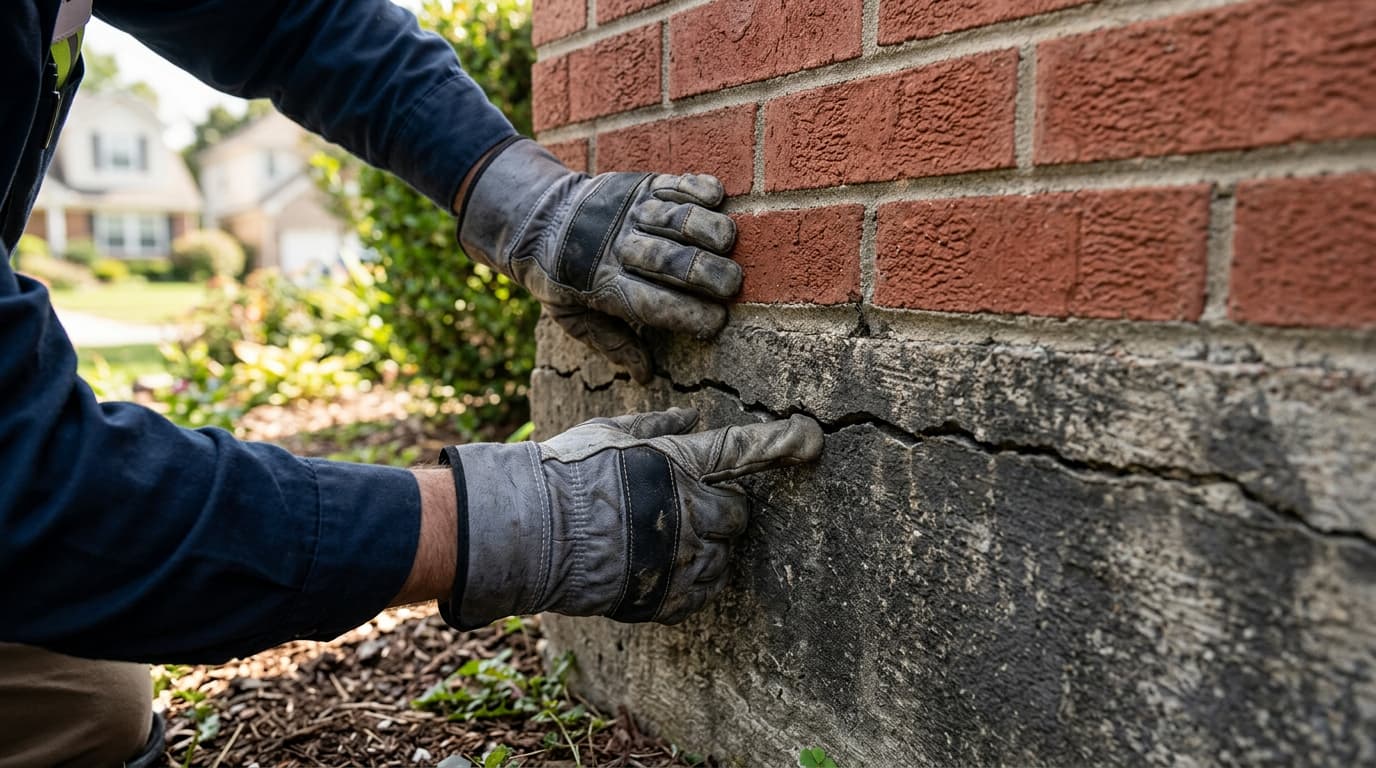
A slab foundation takes the full force of that expansion and contraction across its entire surface. When the clay swells unevenly under the slab, sections of the concrete can heave upward or drop. Cracks form where the slab has moved, and those cracks are often the first visible sign something has shifted. Because the concrete is one connected piece, movement in one area can affect a wide section of the home.
A pier and beam foundation distributes that force through individual supports rather than across a solid plane. When the soil moves, individual piers can shift independently. If one pier settles more than the others, the floor above tilts in that section. The movement is more localized, which is both an advantage and a complication: the problem is easier to pinpoint, but it can develop unevenly across the home in ways that are harder to see until the floor has moved enough to notice.
Moisture and Each Foundation Type
Moisture is the biggest vulnerability of a pier and beam foundation. The crawl space sits just above the soil, and in Wichita that soil stays wet for extended periods after spring rain. Without proper encapsulation, that moisture evaporates into the crawl space, saturates the wood framing, and over time causes rot, mold, and weakened floor supports. The crawl space makes the system easy to access and repair, but it also means the wood is never far from the ground and everything in it.
Slab foundations do not have a crawl space moisture problem in the same way. But they are not immune to water. Moisture can still enter through cracks in the slab, through the joint where the slab meets the foundation wall, or through hydrostatic pressure when the soil around the perimeter stays saturated. When water gets under or through a slab, it tends to move silently until it shows up as a damp floor, efflorescence, or a crack that is widening. In Wichita's wet springs, homes with drainage problems around the perimeter are particularly exposed to this. Fixing the drainage around the foundation is often the first step regardless of which foundation type you have.
How Problems Show Up Differently in Each Type
Because the structures are different, what you see inside the house when something goes wrong tends to be different too. Recognizing which pattern matches your situation helps narrow down the cause faster.
In a slab home, problems often appear as cracks: in the slab floor itself, in the drywall above door and window frames, or along the exterior where the brick or stucco has moved. Floors may feel uneven or hollow in sections. Doors and windows can stick, but the pattern of cracking in the walls tends to be more dramatic with slab movement than with pier and beam.
In a pier and beam home, the floor itself is usually the first indicator. A floor that bounces, feels soft in a corner, or has developed a slope is responding to what is happening to the supports below. Musty smells are more common because of the crawl space. Sticking doors show up too, particularly when a pier has shifted enough to distort the frame above it. A few specific signs that point more toward pier and beam problems:
- Floors that flex noticeably when you walk across them
- A persistent musty smell strongest near the floor or in a particular room
- Baseboards pulling away from the floor in one area of the house
What Repairs Look Like for Each Type
Pier and beam repairs are almost always more accessible. A technician goes into the crawl space, assesses the supports directly, and can shim, replace, or add supports without touching the living space above. If the joists or beams have taken moisture damage, new framing gets bolted alongside the original to restore the support. The work happens below the floor and the homeowner often does not see any disruption upstairs.
Slab repairs are more involved because there is no open space to work in. When a section of slab has settled, piers can be driven down through or beneath the concrete to reach stable soil and lift the slab back toward level. This is effective, but it requires drilling through the concrete and working with heavier equipment. When a slab crack has allowed water intrusion, the crack gets sealed from above or through injection, but addressing the drainage issue that let water reach the slab in the first place is just as important as sealing the crack itself.
In both cases, a professional foundation inspection is what determines what is actually happening and what the right repair is. The symptoms can look similar from inside the house even when the cause and the fix are completely different.
FREQUENTLY ASKED QUESTIONS
Which foundation type is more common in Wichita?
Both are common, but the split depends heavily on the age of the neighborhood. According to HUD housing data, about 14 percent of Wichita's housing stock was built before 1940, and the 1950s added another 25 percent. That means roughly four in ten homes in the city were built during the pier and beam era. Older central Wichita neighborhoods lean heavily pier and beam. Homes built from the 1960s onward, which covers most of the newer suburbs, are more likely to be slab.
Does one foundation type hold its home value better in Kansas?
Not in any meaningful way. What affects value is the condition of the foundation, not the type. A well-maintained pier and beam home and a well-maintained slab home both sell fine. A foundation with deferred problems is a problem regardless of which type it is. Buyers and inspectors look at condition, not construction method.
Is one type cheaper to repair than the other?
Pier and beam repairs tend to be less expensive when caught early because the work is accessible and does not require cutting through concrete. Slab repairs that involve driving piers or cutting through the foundation are more labor-intensive. That said, a severely neglected pier and beam foundation with rotted framing can be just as costly as a major slab repair. The size of the job matters more than the type.
Can you tell what type of foundation a home has without going into the crawl space?
Usually yes. If the home has a crawl space access panel on the exterior or in a utility closet, it is pier and beam. If the floors feel solid and concrete-hard underfoot, it is almost certainly slab. A home inspector or foundation contractor can confirm it in minutes.
Which foundation type handles Kansas tornadoes and severe weather better?
Neither type provides meaningful shelter from a tornado on its own.
When to Consult a Professional in Wichita
Whether you have a pier and beam or a slab, the same principle applies: the earlier a foundation problem gets looked at, the more options you have and the less it costs to address. Symptoms that show up and then go away with the season are still worth having inspected, because seasonal movement in Wichita clay tends to accumulate over time rather than reverse itself.
Chief Cornerstone Foundation works with both foundation types across Wichita and knows how each one behaves under Kansas soil conditions. Schedule a foundation inspection or call us at (316) 365-0032 and we will tell you straight what is going on and what it needs.
Know Your Foundation Type. Know What to Watch For.
Most Wichita homeowners do not think about their foundation until something makes them. Knowing whether you have pier and beam or slab, and what each one is prone to in this climate, puts you ahead of the problem. Soft floors and sticking doors mean something different depending on what is beneath them. So does a crack in the wall, a damp spot near the baseboard, or a door that started dragging after a wet spring. The type of foundation you have is the first piece of context for all of it.