Pier and Beam Foundation: How It Works and Why Wichita Homes Have It
A lot of older Wichita homes sit on pier and beam foundations, and most homeowners who have one did not choose it. It came with the house. Here is what that means, how it works, and what to watch for when something starts to go wrong.
Key Takeaways
- Pier and beam foundations raise the home off the ground on a grid of supports, leaving a crawl space between the floor and the soil below.
- Most older homes in Wichita were built this way before slab construction became standard in the mid-20th century.
- The crawl space is both the advantage and the vulnerability. It allows access and airflow, but it also exposes the wood framing to moisture year-round.
- Wichita's clay soil moves with moisture changes, and pier and beam homes feel that movement differently than slabs do.
- Soft floors, bouncing underfoot, and doors that stick are the most common signs something is off with the supports below.
- The good news: pier and beam foundations are usually easier to repair and adjust than slab foundations, because everything is accessible from the crawl space.
What a Pier and Beam Foundation Actually Is
Instead of pouring a concrete slab directly on the ground, pier and beam construction lifts the home on a grid of supports. The piers are concrete columns set into the ground at regular intervals. Beams run across those piers horizontally. Floor joists sit on top of the beams, and the floor of the house sits on the joists.
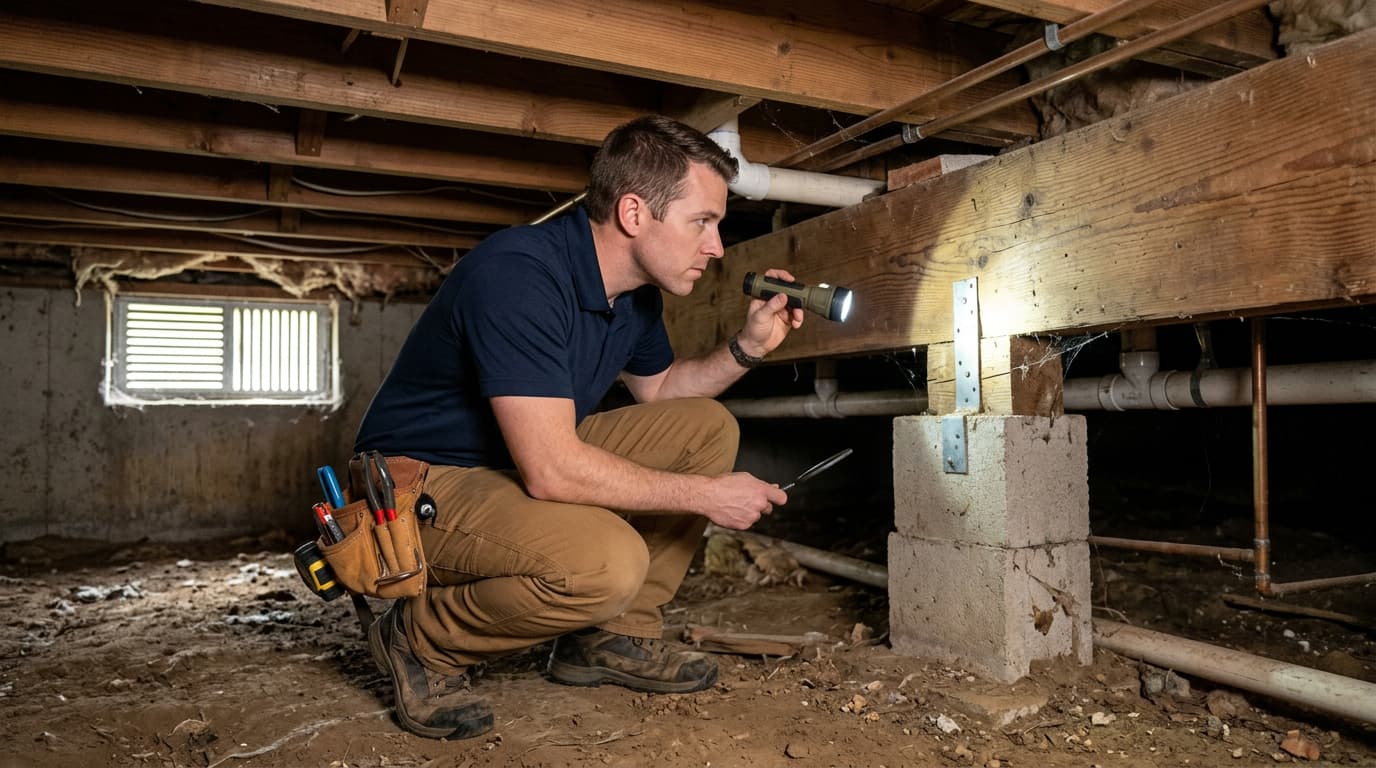
The result is a crawl space, typically 18 inches to three feet of open space between the ground and the bottom of the house. That gap serves a purpose. It keeps the wood framing away from direct contact with the soil, allows plumbing and electrical to run beneath the floor without cutting through concrete, and was meant to provide ventilation to keep moisture from building up.
In practice, that crawl space also becomes the place where moisture problems develop, where pests settle in, and where the slow shifting of the soil beneath the piers becomes visible in the floors above. The foundation works well when everything is in balance. When the soil moves or the wood takes on moisture, that balance tips.
Why Wichita Has So Many Pier and Beam Homes
Pier and beam was the standard way to build homes across most of the central United States until the 1950s and 1960s, when poured concrete slabs became more common. Wichita grew significantly during the early and mid-20th century, with its population more than doubling between 1940 and 1960. According to HUD housing data, about 14 percent of Wichita's housing stock was built before 1940, and another 25 percent was added in the 1950s alone. That means roughly four in ten homes in the city were built during the pier and beam era, and many of them are still standing in older neighborhoods closer to the city center.
It was also a practical choice for the local soil. Wichita sits on expansive clay, which swells and contracts with the seasons. The area averages around 36 inches of rainfall per year, with June as the wettest month, and that wet-dry cycle is what drives the soil movement that pier and beam construction was designed to handle. Raising the home off the ground on piers reduced the direct pressure the moving soil could apply to the structure. A slab poured directly onto that clay takes the full force of every expansion and contraction cycle. A pier and beam home distributes that force through the individual supports instead.
That does not make pier and beam immune to soil movement. It just changes how the movement shows up and what kind of repair is needed when it does.
How Pier and Beam Foundations Fail in Wichita
Two things cause most pier and beam problems in this area: moisture getting into the crawl space and soil movement beneath the piers. They often happen together.
When the crawl space stays damp, the wood framing absorbs that moisture over time. Joists and beams swell, soften, and in persistent cases begin to rot. A joist that has been wet for years does not support the floor above the same way it did when it was dry. Floors start to feel spongy. They flex where they used not to. In some spots they develop a noticeable dip.
The piers themselves can also shift. When the clay soil beneath a pier expands during a wet spring and then contracts in a dry summer, the pier moves with it. If all the piers move evenly, the floor stays level. If they move unevenly, which is common when drainage varies across the lot, the floor tilts. Doors in that part of the house stop latching. Gaps appear between walls and ceilings. The home starts to show the same symptoms as a slab foundation with settlement, but the fix is different because the cause is different.
Signs Your Pier and Beam Foundation Needs Attention
The signs show up in the floors first. A floor that bounces slightly when you walk across it, that feels soft in one corner of a room, or that has developed a slope you can feel but not see is telling you something has shifted or softened below. These are not cosmetic issues. They reflect what is happening to the structure underneath.
Doors that stick or will not latch are another common indicator, especially interior doors that have never been a problem before. A musty smell that is stronger near the floor points to moisture in the crawl space. Visible gaps between the baseboard and the floor, or between the wall and the ceiling, mean the structure has moved enough to pull things apart. Any of those signs, particularly if more than one is present at the same time, is worth having looked at by someone who can get into the crawl space and assess what is actually going on. A foundation inspection is the fastest way to know whether the issue is cosmetic or structural.
What Repairs Look Like for Pier and Beam Foundations
One of the real advantages of pier and beam over slab is that repairs are accessible. There is no concrete to cut through to reach the problem. A technician can go into the crawl space, inspect the beams and joists directly, and often address the issue without disrupting the living space above at all.
When piers have shifted, the typical repair involves shimming or replacing the affected supports to bring the beam and floor back to level. If a pier has sunk because the soil beneath it has eroded or settled, a new support can be driven deeper to reach stable ground. Damaged joists or beams get a new piece of wood bolted alongside the original, restoring the support without tearing out the whole floor system.
How involved the repair gets depends on how long the problem has been developing. A single shifted pier caught early is a straightforward job. The same pier left for five more wet seasons, with joists above it that have been absorbing moisture the whole time, becomes a different conversation. That is the pattern with pier and beam: early repairs stay manageable, and delayed ones rarely do.
Moisture is usually part of the conversation too. Addressing the crawl space conditions alongside the structural repairs is what keeps the new work from running into the same problem in a few years. Our article on crawl space encapsulation in Wichita explains why that piece matters and what it involves.
FREQUENTLY ASKED QUESTIONS
Is pier and beam better or worse than a slab foundation?
Neither is universally better. Slab foundations have fewer moisture vulnerabilities but are harder and more expensive to repair because everything is buried in concrete. Pier and beam foundations are more susceptible to crawl space moisture but much easier to access, inspect, and fix. In Wichita, where the soil moves seasonally, both types have trade-offs.
How long do pier and beam foundations last?
A well-maintained pier and beam foundation can last the life of the home. The wood framing is the variable. Joists and beams that have been kept dry and inspected periodically hold up for decades. The ones that have been sitting in a damp, unmanaged crawl space for 30 or 40 years are a different story. Maintenance matters more with this foundation type than with slab.
Can I convert a pier and beam foundation to a slab?
It is technically possible but rarely worth it. The cost and disruption are significant, and it does not eliminate the underlying soil challenge. In most cases, repairing and protecting the existing pier and beam foundation is the more practical path.
How often should a pier and beam foundation be inspected?
Every three to five years is a reasonable baseline for a home with no active symptoms. If you have noticed any floor movement, sticking doors, or crawl space moisture, have it looked at sooner. Problems caught early in a pier and beam home are almost always smaller jobs than the same problems left for a few more seasons.
When to Call a Professional in Wichita
If your floors have started to move, your doors have started to stick, or you have not had the crawl space looked at in years, do not wait another season. Pier and beam problems in Wichita tend to get worse in the spring when the soil is most active, and catching them before that cycle runs again is almost always a smaller job.
Chief Cornerstone Foundation has worked under Wichita homes long enough to know what pier and beam damage looks like at every stage, from a single shifted pier to full joist replacement. Schedule a foundation inspection or call us at (316) 365-0032 and we will tell you straight what is going on.
Your Pier and Beam Foundation Has Been Working Hard. Give It a Look.
Older Wichita homes have been through a lot of Kansas seasons. The pier and beam foundations under them have absorbed decades of wet springs and dry summers, and most have held up remarkably well. But wood and concrete have limits, and the crawl space is the one part of the house that almost no one ever looks at until something goes wrong. A periodic inspection is not a sign that something is broken. It is how you make sure it stays that way.