Drainage Installation in Wichita: How It Protects Your Home and Foundation
Most foundation problems in Wichita do not start with a structural failure. They start with water sitting where it should not. When rain falls faster than the ground can absorb it, or when the soil around a home slopes toward the foundation instead of away from it, water pools against the foundation wall, saturates the clay below the slab or the piers, and begins the slow work of causing damage that shows up months or years later as cracks, settlement, and bowing walls. Proper drainage installation stops that process before it starts.
Key Takeaways
- Poor drainage is one of the leading causes of foundation damage in Wichita, where heavy spring rain and slow-draining clay soil create consistent pressure against foundations.
- Drainage solutions range from regrading the yard and extending downspouts to French drains and surface channel systems, depending on where water is collecting and how.
- The goal is always the same: move water away from the foundation before it saturates the soil around it.
- Drainage problems are usually visible before they cause foundation damage. Catching them early costs a fraction of repairing the foundation damage they cause if left alone.
- In Wichita's climate, drainage is not a one-time fix. The combination of clay soil, spring rainfall, and freeze-thaw cycles means drainage systems need periodic maintenance to stay effective.
Why Drainage Matters More in Wichita Than Most Places
Two things make drainage a more pressing issue in Wichita than in many other parts of the country: the rainfall pattern and the soil. Wichita averages about 36 inches of rainfall per year, with June alone bringing over four inches. That rain does not arrive in a slow, steady drip. It comes in heavy events, often faster than the ground can absorb it, which means runoff is a regular challenge rather than an occasional one.
The soil makes it worse. Sedgwick County sits on expansive clay classified as Hydrologic Group D by the USDA, the highest rating for surface runoff and the slowest rate of water infiltration in the federal system. When it rains in Wichita, the water does not soak in quickly. It moves across the surface, following whatever grade is available, and it pools wherever the grade allows it to stop. The City of Wichita maintains a dedicated stormwater management program specifically because runoff from clay-dense residential lots is one of the city's most consistent drainage challenges. If that low spot is against a foundation wall, the wall absorbs it.
Homes built on lots with flat or inward-sloping grades, clogged gutters that overflow against the house, or downspouts that discharge too close to the foundation are particularly exposed. A well-designed drainage system takes that water and redirects it away from the house before the soil has a chance to saturate around the foundation.
Types of Drainage Solutions for Wichita Homes
Regrading
The simplest and often most effective drainage fix is correcting the slope of the ground around the foundation. Code typically requires the yard to slope away from the house at a minimum of six inches over the first ten feet. Many Wichita homes, particularly older ones, have settled or shifted to the point where that slope has reversed in spots. Regrading restores the natural fall that keeps water moving away from the foundation rather than toward it.
Downspout extensions and gutter corrections
Gutters collect roof runoff and route it to downspouts. If the downspouts discharge too close to the foundation, they deliver concentrated water directly to the worst possible location. Extending downspout discharge at least four to six feet from the house, and ensuring gutters are clean and pitched correctly, addresses one of the most common drainage problems on Wichita lots without requiring any excavation.
French drains
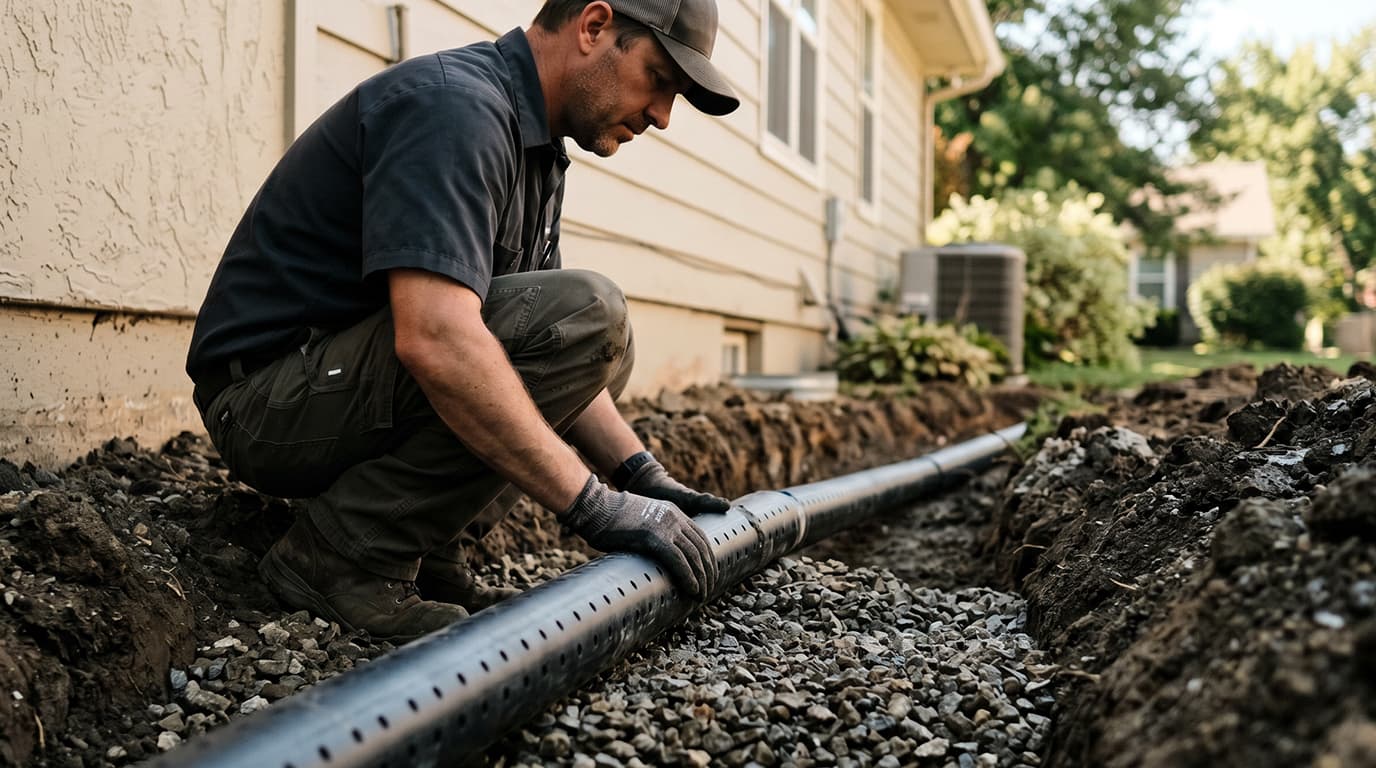
A French drain is a perforated pipe buried in a gravel-filled trench that intercepts groundwater or surface water and redirects it away from the foundation. They are installed along the perimeter of the foundation, across the yard at the point where water consistently collects, or both. In Wichita's clay-heavy soil, a French drain needs to be properly sized and installed at the right depth to be effective. A drain that does not outlet correctly just moves the water problem to a different location.
Surface channel drains
For areas where water collects quickly on hard surfaces like driveways, patios, or at entry points to the home, surface channel drains intercept that sheet flow before it can pool against the foundation. They work faster than subsurface systems because the water never has to infiltrate the soil first, which makes them particularly useful in a heavy rain event on Wichita's clay-dense lots.
Signs Your Wichita Home Has a Drainage Problem
Drainage problems are usually visible well before they cause foundation damage. Water that pools in the yard and takes more than 24 hours to drain after a rain is the clearest sign. A yard that always has a wet corner or a consistently soggy strip along the fence line is telling you the slope or the soil is routing water somewhere it should not go.
White chalky deposits on the foundation wall, called efflorescence, are a sign that water has been moving through the concrete repeatedly. A basement or crawl space that smells musty after rain, or shows water stains on the walls, points to moisture working its way through the foundation from saturated soil outside. Cracks that are widening after a wet spring, or foundation walls that have developed an inward lean, are further along and indicate the drainage problem has already begun to affect the structure. Addressing foundation repair alongside drainage correction is necessary at that stage.
Why Drainage and Foundation Repair Often Go Together
A foundation repair that does not address the drainage issue that caused it is a repair waiting to fail. If water continues to pool against the foundation after piers are installed or cracks are sealed, the soil continues to move with every wet and dry cycle, and the repaired foundation faces the same pressure that damaged it in the first place.
This is why a thorough inspection looks at the drainage conditions around the home alongside the foundation itself. In many cases, improving drainage is the most important part of the repair plan, not an afterthought. For homes with crawl spaces, addressing exterior drainage often reduces the crawl space moisture problem at the same time, which means less risk of mold and wood damage below the floor. Because water that pools against a foundation does not stay outside, it works its way through the soil and into the crawl space too, which is why the connection between drainage and crawl space damage in Wichita is closer than most homeowners expect.
FREQUENTLY ASKED QUESTIONS
How do I know if my drainage problem is serious enough to need professional installation?
If water is pooling against the foundation wall after rain, if you have any signs of water intrusion in a crawl space or basement, or if you are already seeing foundation symptoms like cracks or sticking doors, a professional assessment is worth getting. DIY fixes like extending downspouts can help with minor issues. When water is consistently reaching the foundation, a properly installed drainage system is what keeps it from becoming a foundation repair.
How long does a French drain last?
A properly installed French drain typically lasts 30 to 40 years. The main cause of failure is the pipe clogging with sediment or root intrusion over time. In Wichita's clay-heavy soil, using a sock-wrapped pipe and gravel with the right gradation reduces clogging significantly. Periodic flushing every few years extends the system's life.
Will better drainage fix my foundation problem?
It depends on how far the damage has progressed. If the foundation problem is in its early stages and was driven primarily by moisture-related soil movement, improved drainage can stop the progression and sometimes allow the foundation to stabilize on its own. If the foundation has already settled or cracked, drainage improvement is part of the solution but foundation repair work is also needed. An inspection will tell you which situation you are in.
Does drainage installation require a permit in Wichita?
It depends on the scope of the work. Surface regrading typically does not. Subsurface drainage systems that connect to the municipal storm system usually do. A licensed contractor will know what is required for your specific project and can pull the necessary permits.
Can I install a French drain myself?
A DIY French drain that outlets incorrectly just moves the water to a different problem location.
When to Consult a Professional in Wichita
If your yard pools water after rain, if water is reaching your foundation wall, or if you are already seeing foundation symptoms, do not wait for another wet season to confirm what you are already seeing. Every spring in Wichita puts pressure on foundations, and drainage problems that get addressed before a wet June are cheaper to fix than the foundation damage they cause if they get another year.
Chief Cornerstone Foundation assesses drainage conditions alongside foundation conditions on every inspection, because one rarely exists without the other in Wichita's climate. Schedule a drainage and foundation inspection or call us at (316) 365-0032 and we will tell you straight what the water is doing and how to stop it.
Good Drainage Is the First Line of Defense for Any Wichita Foundation
Getting the drainage around your home assessed before next spring is the practical move. It costs a lot less than the foundation repairs that poor drainage causes, and the fix is often simpler than homeowners expect once the water source is correctly identified. Most drainage problems are visible from the yard. Most drainage solutions keep the water moving before it ever reaches the foundation. The homes that avoid expensive foundation repairs in Wichita are usually the ones where someone paid attention to where the water goes after it rains.