What to Expect During Foundation Repair in Wichita
For most Wichita homeowners, foundation repair is not something they have done before. The inspection reveals a problem, a repair is recommended, and then comes a period of uncertainty about what actually happens next. How long will it take? Will the house be livable during the work? What does the yard look like afterward? These are reasonable questions, and the answers depend on what type of repair is being done and how far along the problem is.
This article walks through what foundation repair typically looks like in Wichita, from the inspection through completion, so you know what to expect at each stage and what questions to ask before any work begins.
Key Takeaways
- Most foundation repairs in Wichita take one to three days. More involved jobs with multiple pier installations or extensive drainage work can run longer.
- Most homeowners can stay in the house during repairs. The work happens outside or in the crawl space, not inside the living areas.
- The inspection is what determines the repair plan. No reputable company should recommend a specific repair before looking at the foundation in person.
- After repair, some cosmetic issues like cracks in drywall and sticking doors often improve but may need separate attention. The repair stabilizes the foundation. It does not undo every visible sign of past movement.
Step 1: The Inspection
A foundation inspection is not a sales call. It should be a systematic look at the foundation, the drainage around the home, and the symptoms the homeowner has noticed inside. A good inspector walks the perimeter of the house, checks the crawl space or basement, looks at floor slopes, door and window behavior, and any visible cracks, and then explains what they found and why.
In Wichita, a thorough inspection also looks at the drainage conditions around the lot. Because the clay soil here responds to moisture so directly, a crack or settlement problem often has a drainage component that needs to be addressed alongside the foundation repair itself. An inspection that only looks at the foundation and skips the yard is missing part of the picture.
Two things to watch for during an inspection:
- The inspector should explain what they see and why it matters before recommending any repair
- A recommendation that comes before the inspection is a red flag, not a service
Step 2: Understanding the Repair Plan
Once the inspection is complete, the repair plan should be explained in plain terms. What is causing the problem, what repair addresses that specific cause, how long it will take, what the work area will look like during and after, and what is and is not covered by the warranty.
The most common repair recommended for settlement in Wichita is a pier system. Steel piers are driven through the clay layer to stable soil below, then connected to the foundation to stop movement and, where possible, restore some level. In Kansas, expansive clay soils develop cracks more than an inch wide during dry periods, which means the active zone extends deep. Steel piers typically reach 20 to 25 feet to get below that zone and into stable load-bearing soil. That depth is what makes the repair permanent rather than temporary.
For crawl space homes, the plan may also include moisture control work like encapsulation or vapor barrier installation, because wood that has been exposed to moisture needs to be stabilized before or alongside any pier work.
If drainage is part of the problem, that work typically happens alongside or just before the foundation repair. Stabilizing a foundation while water continues to pool against it is a repair waiting to be undone.
Step 3: What Happens on Repair Day
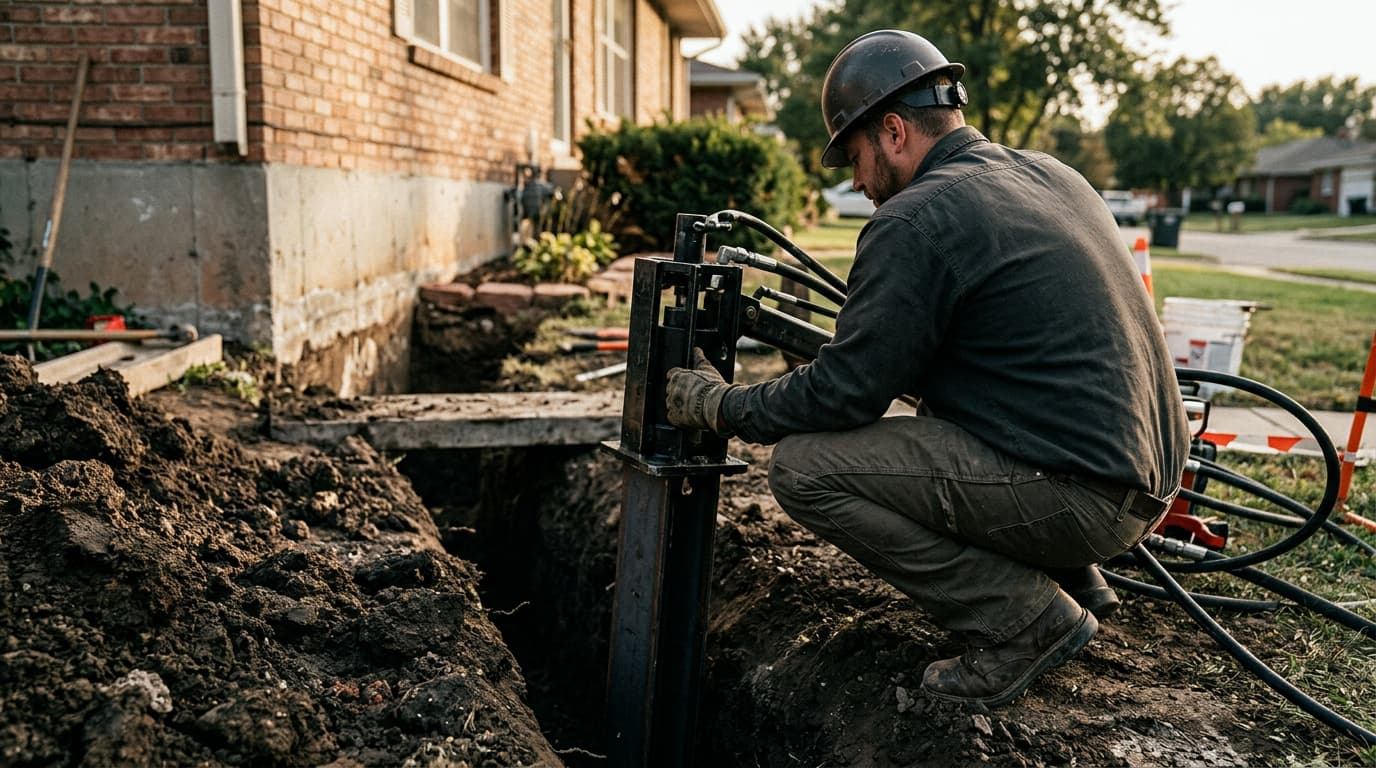
For pier installation, the crew works from the exterior perimeter of the foundation. Access points are dug along the foundation wall where piers will be placed. The piers are pressed or driven down through the soil using hydraulic equipment until they reach the load-bearing layer below the active clay zone. Each pier is then bracketed to the foundation. On a typical Wichita home, this process takes one to two days depending on the number of piers and site conditions.
The noise level is moderate. The equipment runs outside. Most homeowners stay in the house without disruption to daily life. The main impact on the property is the excavation along the foundation perimeter, which is restored before the crew leaves. Landscaping in the work area, shrubs, mulch, edging, is typically removed and replaced as part of the job. Plants close to the foundation should be noted before work begins so both parties have a clear expectation.
For crawl space work, the crew works below the floor. The living space above is not affected. What you will notice during a crawl space repair day:
- Sound from below the floor as the work happens
- Equipment and materials staged near the crawl space access point outside
What the Home Looks Like After Repair
The most common question after a foundation repair is why the cracks in the drywall are still there. The repair stopped the movement. It did not reverse every cosmetic effect of the movement that already happened. Drywall cracks, doors that stick slightly, gaps between baseboards and floors, these may improve as the structure settles into its repaired position, but some will need to be addressed separately by a drywall or finish contractor.
On the exterior, the excavated areas along the foundation are backfilled and tamped. The yard will have evidence of the work, disturbed soil, replanted vegetation, and sometimes a slight grade adjustment. Most of it blends back within a season. Concrete flatwork near the foundation, patios, walkways, steps, may need separate attention if the settlement affected them.
What should be noticeably better right away: doors that were binding at the top or bottom often move more freely once the frame has been restored closer to level. Floors that had a pronounced slope sometimes feel more even. The structural problem is resolved. The cosmetic cleanup is a separate phase that happens after.
The Warranty: What It Covers and What It Does Not
Foundation repairs come with warranties that vary by company and repair type. A pier warranty typically covers the performance of the piers themselves, meaning they will not move or fail. It does not cover new settlement caused by conditions that were not part of the original repair plan, like a drainage problem that developed after the work was done, or movement in a different section of the foundation that was not addressed.
Before signing anything, ask specifically what the warranty covers, how long it lasts, whether it transfers to a future buyer, and what the process is if something changes after the repair. The transferability question matters more than most homeowners realize. Unrepaired foundation problems can reduce a home's value by 10 to 25 percent. A professionally repaired foundation with full documentation and a transferable warranty typically reduces value by only 2 to 5 percent, and in strong markets, by nothing at all. That difference shows up directly in what buyers offer and whether deals close.
FREQUENTLY ASKED QUESTIONS
How long does foundation repair take in Wichita?
Most pier installations take one to two days. Larger jobs with more piers, or repairs that include drainage work or crawl space encapsulation, may run two to four days. The inspection and repair plan will give you a clearer timeline specific to your home.
Do I need to leave the house during repairs?
For most pier and crawl space repairs, no. The work happens outside or below the floor. You can stay in the house, though the noise and activity outside may be disruptive to a home office or young children during work hours. Ask the contractor specifically about what to expect for your repair type.
Will the cracks in my walls go away after the repair?
Some may close partially as the foundation is lifted back toward level. Most will still be visible and will need to be patched separately. The repair stops the movement that caused the cracks. A drywall or finish contractor handles the cosmetic fix after the structural work is done.
How do I know if I need one company or multiple contractors?
Foundation repair companies in Wichita typically handle the pier installation, drainage work, and crawl space repairs under one scope. Drywall, painting, landscaping restoration, and concrete flatwork are usually separate. Your repair contractor should tell you clearly what they will and will not handle so you can plan accordingly.
Will foundation repair affect my ability to sell the house?
A repaired foundation with documentation is almost always better for a sale than an unrepaired one. Buyers and their inspectors will find the problem regardless. A repair with a transferable warranty turns a liability into a documented asset. Ask your contractor whether the warranty transfers to a new owner before the work begins.
Ready to Get Started in Wichita?
If you have been putting off a foundation inspection because you were not sure what the process looks like, now you have a clearer picture. The inspection is the first step, and it does not commit you to anything. It tells you what is going on and what your options are.
Chief Cornerstone Foundation has walked Wichita homeowners through this process through enough Kansas seasons to know how to explain what is happening and what the repair actually involves before any work begins. Schedule your free foundation inspection or call us at (316) 365-0032.
Foundation Repair Is a Process. Knowing What to Expect Makes It a Manageable One.
Most Wichita homeowners who go through foundation repair say the process was less disruptive than they expected. The inspection takes an hour. The repair is usually done in a day or two. The yard goes back to normal within a season. What does not go back to normal on its own is the foundation problem, which is why getting the inspection done before another wet Kansas spring runs is the practical move. The longer the problem develops, the more piers the repair takes and the bigger the job gets.