How Foundation Waterproofing Works in Wichita
Foundation waterproofing is not one thing. It is a category of solutions that all do the same job from different angles.
In Wichita, where heavy clay soil holds spring rainfall against foundations for weeks and a wet June can deliver over four inches of rain in a month, moisture management is one of the most practical investments a homeowner can make. The question is not whether waterproofing is worth doing. It is understanding what each method actually does, when it applies, and what the result looks like for your specific home and lot.
This article explains how the main waterproofing approaches work mechanically, why Wichita's soil and climate make each one behave differently here than in other parts of the country, and what homeowners typically see change after a system is installed.
Key Takeaways
- Foundation waterproofing works by either blocking water before it reaches the wall, collecting and removing water that gets through, or both.
- Wichita's Hydrologic Group D clay soil holds moisture for days or weeks after rain, creating sustained pressure against foundation walls that other soil types do not.
- No waterproofing system eliminates moisture from the soil. The goal is to manage where it goes and prevent it from causing damage inside the structure.
- Drainage improvements outside the home reduce the pressure that waterproofing systems have to manage, which is why the two are almost always discussed together in Wichita.
- A waterproofed foundation stops being a source of moisture, mold risk, and wood damage below the floor, which protects the structure above it.
What Water Actually Does to a Foundation Wall
Concrete is not waterproof. It is porous, which means water under pressure will move through it given enough time and enough cycles of wet and dry. In a Wichita home surrounded by clay soil, that pressure is applied repeatedly through every spring rain season, and the clay slows the drainage enough that the wall stays under pressure longer than it would in sandier soil.
Water that moves through a foundation wall does two things. First, it carries dissolved minerals with it. When the water evaporates on the inside surface, those minerals are left behind as white chalky deposits, which is the efflorescence that shows up on basement or crawl space walls. Second, the repeated wet-dry cycle expands and contracts the concrete slightly each time, which is how small cracks become larger ones and how tight mortar joints in block foundations eventually open.
Water that gets past the wall does not stop there. It evaporates into the crawl space or basement air, raises the humidity in that space, and creates conditions where mold and wood rot can establish. Because air moves upward through a home naturally, that moisture eventually reaches the living areas above. Wichita averages about 36 inches of rainfall per year with June as the wettest month, which means a Wichita home without adequate waterproofing gets that pressure applied consistently from late spring through summer.
How the Main Waterproofing Methods Work
Exterior membrane waterproofing
The foundation perimeter is excavated down to the footing. The wall surface is cleaned and a waterproof membrane is applied, typically a rubberized asphalt or polymer coating that bonds to the concrete and creates a barrier that water cannot penetrate. A drainage board is installed over the membrane to direct any water that reaches the wall surface downward to a drain tile at the footing, which routes it away from the structure. The soil is then backfilled. The result is a wall that water cannot reach.
Interior drainage systems
Rather than stopping water at the wall, an interior system collects it after it enters and removes it before it can cause damage. A channel is cut along the perimeter of the basement floor at the base of the wall. A perforated drain pipe is installed in that channel with gravel for drainage. The concrete floor is patched over it. Water that comes through the wall or the floor joint enters the channel, runs to a sump pit, and a sump pump removes it from the home. The living space is unaffected and the yard stays untouched.
Crack injection
For cracks that are allowing water entry through an otherwise sound wall, epoxy or polyurethane foam is injected into the crack under pressure, filling the void from the inside out. Epoxy bonds the two sides of the crack back together and restores the wall's load-bearing capacity across that section. Polyurethane foam expands to fill the crack and remains flexible, which makes it better suited for cracks that are subject to minor movement. Crack injection addresses a specific entry point. It does not solve a drainage or pressure problem on its own.
Drainage and regrading
Not technically a waterproofing system, but the most important companion to any waterproofing work in Wichita. Correcting the grade around the foundation so water flows away from the house, extending downspouts, and adding French drains where water pools reduces the pressure that reaches the wall in the first place. A waterproofing system working against a lot that channels water toward the foundation is doing more work than it needs to. Drainage work reduces the load on every other system.
What Actually Changes After Waterproofing Is Done
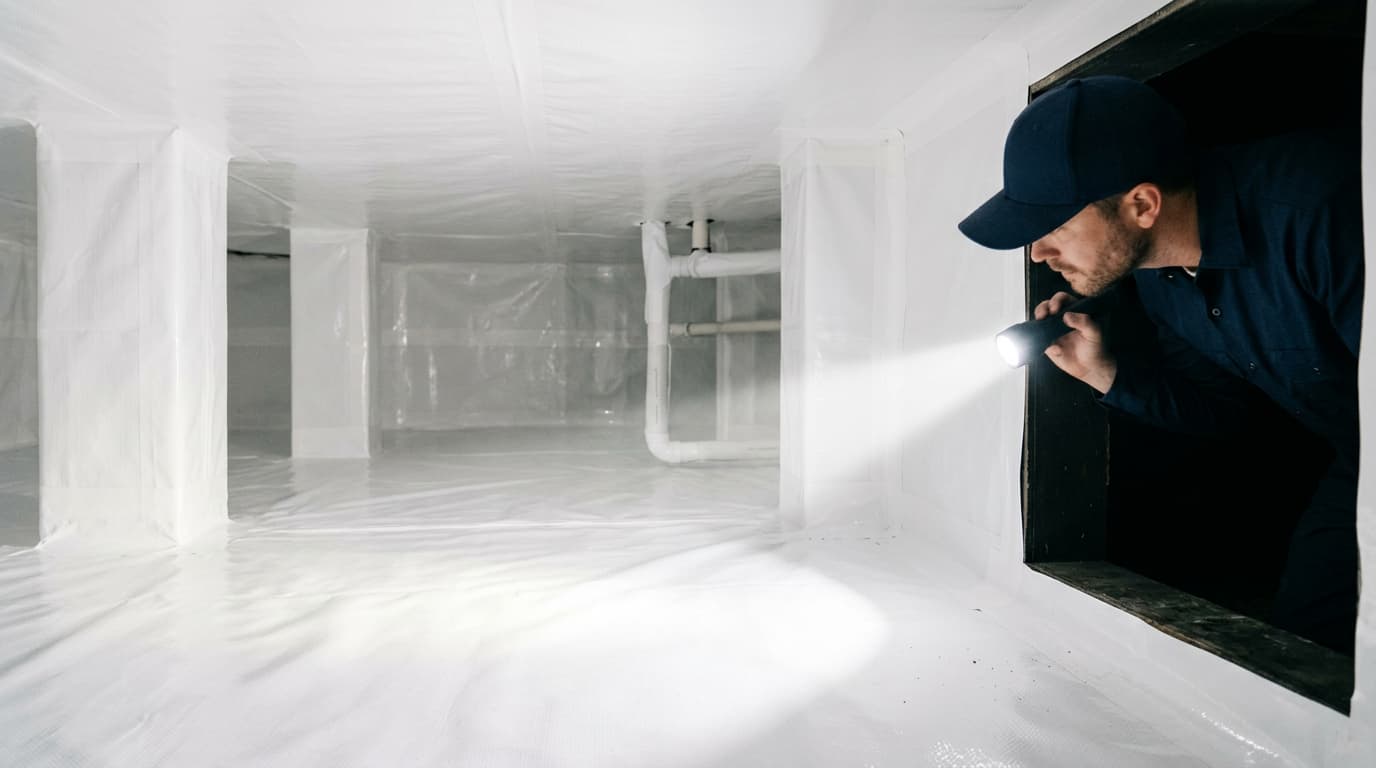
The most immediate change most Wichita homeowners notice is the musty smell going away. That smell is mold and elevated humidity, and once the moisture source is managed, the air in the space stabilizes. It typically takes one full season for the crawl space or basement environment to fully dry out and normalize after waterproofing.
Water stains on walls do not disappear, but new ones stop forming. The efflorescence that has built up stops growing. Wood framing that was damp stops cycling through wet and dry, which removes the primary condition for rot and mold on the structural framing. Once the moisture source is managed, wood in a properly waterproofed crawl space dries to a stable moisture content. Wood rot requires moisture content above 28 percent. A dry crawl space keeps framing well below that threshold.
Energy bills sometimes drop after waterproofing because moist air requires more energy to heat and cool than dry air. The crawl space waterproofing and repair work we do is designed to get the space to a stable, dry condition that holds through Wichita's wet springs without ongoing intervention.
Why Wichita Clay Changes How Waterproofing Performs
In a home with sandy or loamy soil, water drains away from the foundation relatively quickly after a rain event. The window of pressure against the foundation wall is short. In Wichita's Hydrologic Group D clay, which the USDA classifies as having the highest runoff and slowest infiltration rate in the federal system, that window stays open for days. The wall is under moisture pressure for longer durations, more often, and with more volume per rain event than foundations in better-draining soils.
This means that a waterproofing system installed in a Wichita home is doing more work per season than the same system would do in a drier or sandier region. It also means that drainage corrections carry more weight here than they do elsewhere. Reducing how long the clay stays saturated against the wall directly reduces the load on whatever waterproofing system is installed, which makes both the system and the drainage work more effective together than either one alone.
That is why the right question for a Wichita homeowner is not just which waterproofing system to install. It is what combination of waterproofing and drainage management gives the foundation the best chance of staying dry through a Kansas spring.
FREQUENTLY ASKED QUESTIONS
Does waterproofing prevent foundation cracks?
It reduces the moisture cycling that contributes to crack formation, but it does not eliminate soil movement as a cause. Cracks driven by settlement or clay expansion are a separate issue from cracks driven by water infiltration. Waterproofing addresses the water. Foundation repair addresses the movement. Homes with both problems need both solutions.
How long does waterproofing last in Wichita's climate?
An exterior membrane system properly installed with drainage board typically lasts 20 to 30 years. An interior drainage system with a quality sump pump lasts 20 to 30 years for the drain channel, with the sump pump motor needing replacement every 7 to 10 years. Wichita's wet-dry cycle puts more seasonal stress on these systems than drier climates, which is why annual checks before spring are worth doing.
Will waterproofing fix my musty smell?
If the smell is coming from crawl space or basement moisture, yes. The musty smell is mold spores and humid air. Once the moisture source is managed and the space is allowed to dry out over a season, the smell resolves. If the mold has established itself on wood framing, remediation of that framing is needed alongside the waterproofing work.
Do I need waterproofing if my crawl space is already encapsulated?
Encapsulation and waterproofing are related but different. Encapsulation seals the crawl space from ground moisture and outside air. Waterproofing addresses water coming through the foundation walls. If the walls are in good condition and water is not entering through them, encapsulation may be enough. If water is reaching the walls from outside, both may be needed. An inspection will tell you which condition you are in.
When to Consult a Professional in Wichita
If your basement or crawl space has any sign of moisture, water stains, efflorescence, a persistent smell, soft floors, or visible mold, the right move is an inspection before the next wet spring arrives. Wichita's clay holds moisture for weeks. Every spring that reaches an unprotected foundation wall is doing work on it.
Chief Cornerstone Foundation assesses the full picture on every inspection: the wall condition, the drainage conditions outside, and what combination of solutions gives the foundation the best chance of staying dry through a Kansas spring. Schedule a waterproofing inspection or call us at (316) 365-0032.
A Dry Foundation Is Not an Accident. It Is a System Working the Way It Should.
Wichita homes that stay dry through wet springs are not lucky. They have drainage that moves water away before it reaches the foundation, walls with barriers that stop what does reach them, and where needed, interior systems that catch anything that gets through. That combination is what waterproofing looks like when it is working. Understanding each piece of it, what it does and what it does not do, is how you make a decision that holds up through the next decade of Kansas weather.