Waterproofing Basement Walls from the Inside: What Works and What Doesn't
Most Wichita homeowners who deal with basement moisture start by looking for something they can apply to the wall from the inside. That instinct is understandable. It feels like the most direct fix, and there are plenty of products at hardware stores that claim to deliver it. The honest answer is that some interior methods work well for specific problems, and others are temporary at best. Knowing which is which saves money and avoids the frustration of doing the job twice.
Key Takeaways
- Interior waterproofing works by managing water that has already entered, not by stopping it at the source outside the wall.
- Waterproof paint and sealers can reduce minor seepage through porous concrete but will not hold against active water pressure. They peel and fail when water is pushing through, not just seeping.
- Interior drainage systems, perimeter channels that route water to a sump pump, are a genuine long-term solution for basement water management.
- Crack injection with epoxy or polyurethane seals specific entry points and can be a durable fix when the crack is stable and not still moving.
- No interior method eliminates moisture from the soil outside the wall. Drainage improvements outside the home reduce the pressure that interior systems have to manage.
- In Wichita's clay soil, water sits against the foundation for days after rain. Interior solutions here are working harder than they would in sandier regions.
What Doesn't Work: Products That Overpromise
Waterproof paint is the first thing most homeowners try. It is easy to apply, widely available, and relatively inexpensive. For very minor seepage through porous concrete, where moisture is moving through the wall as vapor rather than as liquid water under pressure, it can reduce the problem. That is a narrow use case.
When water is actively pushing through the wall, waterproof paint fails. It bonds to the inside surface of the concrete, but water pressure from the outside pushes against the coating from behind. The paint blisters and peels. It does not stop water that has pressure behind it. In Wichita, after a heavy June rain with several inches falling in a short period, that pressure is exactly what basement walls deal with. The clay soil retains that water and delivers it to the wall steadily for days. Paint is not the right tool for that problem.
Hydraulic cement is another common DIY fix. It expands as it sets and can plug an active leak in a crack or joint quickly. It works well as an emergency stop but is not a permanent fix. As the foundation continues to move with Wichita's seasonal soil changes, the plug can crack or separate. It addresses the symptom at one point in the wall without addressing what is driving the water to that point.
What Does Work: Interior Methods That Hold Up
Interior drainage systems
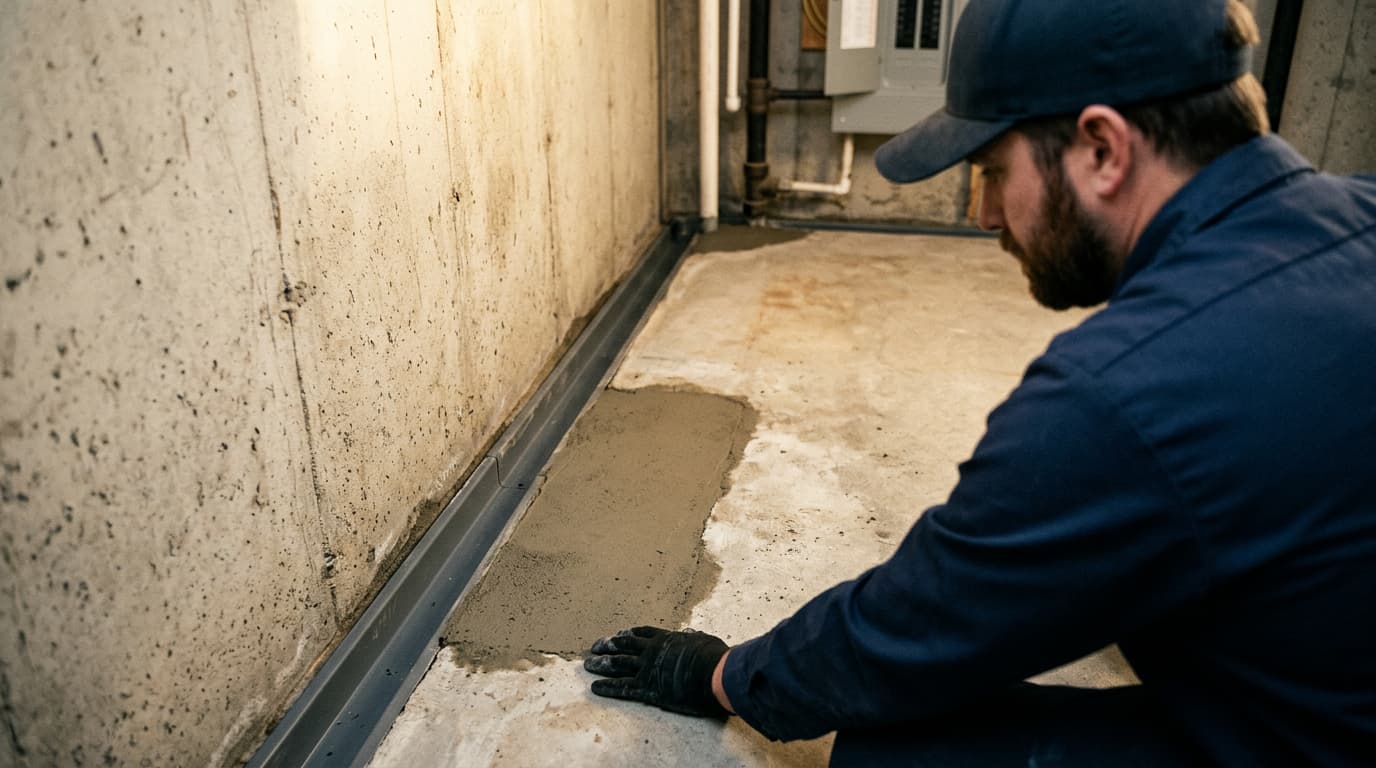
A perimeter drainage channel installed at the base of the basement floor is the most durable interior solution for recurring basement water. The concrete floor is opened along the perimeter, a drain channel and pipe are installed in the void, and the floor is patched over it. Water that enters through the wall or the floor joint drains into the channel, routes to a sump pit, and a sump pump removes it from the home. The wall still gets wet. The water just does not stay inside. A properly installed interior drainage system typically lasts 20 to 30 years and is the standard recommendation for Wichita basements with recurring water entry.
Crack injection
For a specific crack that is allowing water in, epoxy or polyurethane injection fills the void from inside out under pressure. Epoxy bonds the crack together and restores some load-bearing capacity across the joint. Polyurethane foam expands to fill the crack and remains flexible, which makes it better for cracks that experience minor movement. Crack injection is a genuine fix for stable cracks that are not still actively growing. If the crack is widening because of ongoing soil movement, the injection will hold the water but the crack will eventually extend beyond the repair.
Crystalline waterproofing compounds
Unlike paint, crystalline waterproofing penetrates into the pores of the concrete and reacts with moisture to form crystals that block water pathways. It works from inside but creates a barrier within the concrete itself rather than on the surface. It holds up better under pressure than surface coatings, though it still has limits when facing heavy water volume. It is a legitimate option for porous concrete walls where the issue is seepage rather than active inflow through cracks or joints.
Why Wichita's Clay Soil Changes the Calculation
Sedgwick County sits on clay soils classified as Hydrologic Group D by the USDA, the highest category for surface runoff and the slowest for water infiltration. When it rains, the water does not soak away quickly. It stays against the foundation wall for days. Wichita averages about 36 inches of rainfall per year, with June regularly bringing over four inches in a single month. That combination of slow-draining soil and heavy spring rain means interior waterproofing systems here face more sustained pressure per season than the same systems in sandier or drier regions.
This is why drainage corrections around the foundation are almost always recommended alongside interior waterproofing in this area. Re-grading the yard, extending downspouts, and adding French drains where water consistently pools reduces how much moisture reaches the wall before the interior system has to deal with it. A sump pump in a home with poor exterior drainage runs harder, more often, and wears out faster than one in a home where the drainage is keeping water away from the wall. Clay-heavy water like Wichita's also carries sediment that grinds the pump's impeller and shortens its life by years compared to cleaner water sources. Combining proper drainage installation with interior waterproofing is the most durable approach for most Wichita basements.
When Interior Methods Are Not Enough
Interior waterproofing manages water that gets through. It does not stop the wall from getting wet. In most cases that is fine. The wall absorbs moisture and the interior system removes it before it causes damage to the space or the framing.
When the wall itself is deteriorating, crumbling block, spalling concrete, or mortar that has washed out between joints, interior methods cannot compensate for that. The wall needs to be repaired and protected from the outside before the interior system can do its job. The same applies when a wall is bowing inward from soil pressure. A bowing wall is a structural problem, not a waterproofing problem, and managing the water through an interior drain while the wall continues to move is not a solution to the actual issue.
Exterior waterproofing combined with wall repair is the right answer for deteriorated or bowing walls. For walls that are structurally sound and simply allowing water through, interior methods combined with exterior drainage improvements handle the problem durably and without the disruption of a full excavation.
FREQUENTLY ASKED QUESTIONS
Is waterproof paint ever worth using?
For very minor seepage through porous concrete with no active cracks or joints allowing water in, it can reduce dampness on the wall surface. It is not a substitute for a drainage system and it will not hold up if water is entering under any real pressure. Think of it as a last layer of protection in an already dry space, not a solution to a wet one.
How long does interior waterproofing take to install?
A perimeter drainage channel in a standard Wichita basement typically takes one to two days. The living space above is not affected. The main disruption is the concrete cutting and removal along the perimeter, which generates dust and noise. Most crews contain and clean as they go.
Will interior waterproofing stop the musty smell?
If the smell is from moisture and mold driven by water entry, yes. Managing the water removes the moisture source that is feeding the mold and elevating the humidity in the space. It takes one full season for the environment to stabilize after the system is installed. If mold has established itself on the framing or insulation, remediation of those surfaces is needed alongside the waterproofing.
Does crack injection work in Wichita's climate?
Yes, for cracks that are stable and not actively growing. Polyurethane injection is preferred in Wichita because it remains flexible through seasonal temperature swings and minor soil movement. Epoxy is better for cracks that need structural restoration. If the crack is widening with each wet season, injection alone will not keep up with the movement. The soil movement driving the crack needs to be addressed.
Can I finish my basement after interior waterproofing?
Yes. Interior drainage systems are designed to be covered. The sump pit requires an accessible cover, and the system needs to be reachable for maintenance, but otherwise the finished basement can be built over it normally. Many Wichita homeowners waterproof first and finish the basement afterward, which is the right sequence.
When to Consult a Professional in Wichita
If you have tried waterproof paint or plugged a crack and the problem keeps coming back after every wet spring, the interior system is the right next step. If you are seeing wall deterioration, bowing, or cracks that are widening year over year, get an inspection before investing in any interior work.
Chief Cornerstone Foundation has waterproofed basements across Wichita through enough Kansas springs to know which interior methods hold up in this clay soil and which ones are just buying time. Schedule a waterproofing inspection or call us at (316) 365-0032 and we will tell you straight what your basement needs.
Interior Waterproofing Works. Just Not for Every Problem.
For most Wichita basements with recurring water entry through sound walls, an interior drainage system combined with exterior drainage improvements is a durable, cost-effective solution that does not require excavating the yard. It handles what Wichita's clay throws at it spring after spring. Where it falls short is when the wall itself is compromised, when structural problems are driving the water entry, or when the homeowner applies a surface coating to a problem that needs a system. Knowing the difference is what makes the repair stick the first time.