Foundation Waterproofing Membrane: What It Is and When It's Used
If you have ever asked a contractor about exterior foundation waterproofing and heard the word membrane, you may have walked away with more questions than answers. A membrane is the core of exterior waterproofing, but the term gets used loosely to describe several different products that work in different ways and suit different situations. Knowing what you are actually asking for, and what distinguishes one type from another, makes it easier to evaluate a recommendation and understand what you are paying for.
In Wichita, where the combination of heavy spring rain and slow-draining clay soil puts consistent pressure on foundation walls season after season, the right membrane choice matters more than it does in drier or sandier regions. This article explains how waterproofing membranes work, what the main types are, and when exterior membrane waterproofing is the appropriate solution for a Wichita home.
Key Takeaways
- A waterproofing membrane is a barrier applied to the exterior surface of a foundation wall to prevent water from penetrating the concrete. It is not the same as a surface sealer or waterproof paint.
- The two main types are sheet membranes and liquid-applied membranes. Both create a continuous barrier but are installed differently and suit different wall conditions.
- Membrane waterproofing requires excavating around the foundation to expose the wall. It is a substantial job but is the most thorough exterior moisture protection available.
- In Wichita's clay soil, a membrane is most valuable when the wall itself needs protection from sustained moisture pressure, not just when water is visible inside.
What a Foundation Waterproofing Membrane Actually Is
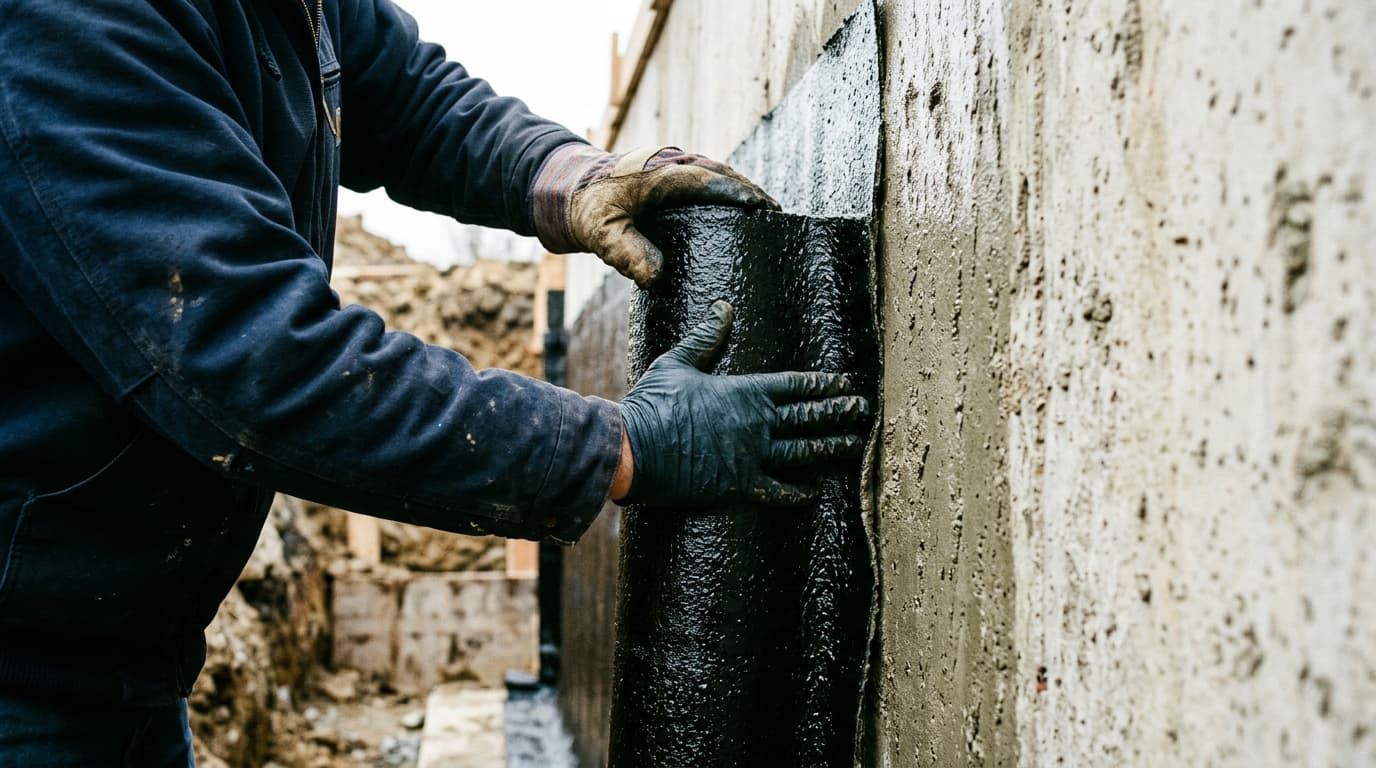
A waterproofing membrane is a continuous, flexible barrier applied to the outside face of the foundation wall. Its job is to prevent water from contacting the concrete directly. Unlike a sealer or paint, which sits on the surface and can be pushed off by water pressure from behind, a membrane bonds to the concrete and creates a layer that water cannot move through, even under sustained pressure.
The membrane is one component of a complete exterior waterproofing system. On its own it stops water at the wall surface. Combined with a drainage board placed over the membrane and a drain tile at the footing, the system also channels any water that reaches the wall surface downward and away from the foundation before it has time to build pressure. That complete system is what exterior waterproofing looks like when it is done correctly. The International Residential Code specifically requires full waterproofing, not just dampproofing, when severe soil-water conditions exist. Wichita's Hydrologic Group D clay meets that threshold. The two main types of membrane used in residential foundation waterproofing:
- Sheet membranes: pre-manufactured rolls of rubberized asphalt or polymer material applied directly to the wall surface
- Liquid-applied membranes: fluid coatings sprayed or rolled onto the wall that cure into a seamless, flexible layer
Sheet Membranes vs. Liquid-Applied Membranes
Sheet membranes come in rolls and are adhered to the wall surface. They provide a known, consistent thickness across the entire application. The seams where sheets overlap are the most vulnerable points, so proper installation requires careful lapping and sealing at every joint. Sheet membranes are predictable and durable, and they perform well on flat, smooth poured concrete walls.
Liquid-applied membranes are sprayed or rolled onto the wall and cure into a seamless coating with no joints or seams. They conform to irregular surfaces and penetrate minor surface voids in the concrete better than sheet material can. For older Wichita homes with block foundations or poured walls that have surface texture and minor irregularities, liquid-applied membranes provide better adhesion and coverage. The trade-off is that the thickness of the application depends on the installer's technique, and thin spots can develop if the application is not uniform.
Most contractors have a preference based on the wall condition and the scope of the job. Both perform well when properly installed with a drainage board and drain tile as part of a complete system.
When Membrane Waterproofing Is the Right Choice for a Wichita Home
Exterior membrane waterproofing is the right answer when the foundation wall needs protection from the outside and interior drainage alone is not sufficient. The clearest cases are when the original waterproofing membrane has failed and is allowing water to saturate the wall itself, when the wall is deteriorating and needs direct access for repair and re-sealing, or when new construction offers the opportunity to do the job correctly from the start.
For Wichita homes specifically, exterior membrane waterproofing is most valuable when the drainage conditions around the foundation are also being corrected at the same time. Wichita averages about 36 inches of rainfall per year, with June regularly bringing over four inches, and the clay soil classified as Hydrologic Group D by the USDA holds that water against the foundation long after the rain stops. Installing a membrane while the soil around the foundation continues to channel water toward the wall reduces the benefit of the membrane. Correcting the grade, extending downspouts, and adding drainage where needed makes the membrane's job easier and extends how long it stays effective.
For walls that are structurally sound and the issue is recurring water intrusion through the wall or floor joint, interior drainage combined with exterior drainage improvements often delivers comparable results at less disruption and cost. The inspection is what determines which approach fits the actual condition of the wall. A foundation waterproofing assessment gives you that answer before any work begins.
How Long a Waterproofing Membrane Lasts
A properly installed exterior waterproofing membrane with drainage board and drain tile typically lasts 20 to 30 years. The membrane material itself is durable, but its longevity depends on three things: how well it was installed, what is in the backfill soil, and whether the drainage system continues to function correctly. Sharp rocks or debris in the backfill can puncture or abrade the membrane. Drain tile that clogs with sediment stops directing water away from the wall, which increases the load on the membrane with each wet season.
For Wichita's clay soil specifically, the backfill quality matters more than in sandier regions. Clay that is compacted tightly against the membrane without drainage board protection can exert pressure that causes the membrane to crack or separate at seams. A properly installed system uses drainage board to protect the membrane surface and prevent the clay from pressing directly against it. Two signs that a membrane system may be failing before its expected lifespan:
- Water returning through the wall in areas where it was previously dry after the waterproofing was done
- Efflorescence reappearing on interior wall surfaces after having stopped following the exterior work
FREQUENTLY ASKED QUESTIONS
Is a waterproofing membrane the same as a vapor barrier?
No. A vapor barrier is typically a plastic sheet installed inside a crawl space to block ground moisture from evaporating upward. A waterproofing membrane is applied to the exterior of the foundation wall to prevent water from penetrating the concrete. They address different water pathways and are not interchangeable.
Does my home already have a waterproofing membrane?
It depends on when it was built and what standards were used at the time. Homes built before the 1980s often have only a dampproofing coat, typically an asphalt-based product that slows moisture movement but is not a true waterproofing membrane. Homes built more recently may have a proper membrane, though quality varies by builder and contractor. If the original documentation is not available, an inspection can assess the condition of the exterior wall from the inside.
How do I know if my membrane has failed?
Water returning through the wall in areas that were previously dry after exterior waterproofing was done is the clearest sign. Efflorescence reappearing on the interior wall surface, or new cracks developing at the wall-floor joint after the exterior work, also point to membrane failure or drainage board degradation. A contractor can assess from the outside by excavating a test section if there is reason to believe the system has failed.
Can a membrane be applied from the inside?
No. A true waterproofing membrane requires access to the exterior wall surface, which means excavation. Products marketed as interior waterproofing membranes are typically crystalline compounds or surface coatings that work differently and address different problems. They manage moisture within the concrete rather than blocking it at the exterior face.
What is dampproofing and how is it different from waterproofing?
Dampproofing slows moisture movement. Waterproofing stops it.
When to Consult a Professional in Wichita
If you are seeing water through the foundation wall, if an existing exterior waterproofing system is showing signs of failure, or if you are planning work that already opens the foundation perimeter, an exterior membrane assessment is worth including in the scope. Doing the membrane work while the wall is already exposed saves the cost of excavating twice.
Chief Cornerstone Foundation assesses both the wall condition and the drainage situation on every waterproofing inspection, because in Wichita the two are almost always connected. Schedule a waterproofing inspection or call us at (316) 365-0032 and we will tell you straight what your foundation wall needs and whether exterior or interior work is the right call.
A Membrane Is the Most Complete Exterior Protection. Knowing When It's Needed Is What Makes It Worth the Investment.
Exterior waterproofing with a membrane is the most thorough moisture protection available for a foundation wall. It is also one of the more disruptive and expensive jobs a homeowner can undertake. That combination means it is worth doing when the wall condition calls for it, and not worth doing when interior drainage and drainage corrections can achieve the same result with less disruption. The inspection is what separates those two situations. A contractor who recommends a full exterior excavation without inspecting the wall condition and drainage first is selling a solution before understanding the problem.