Interior vs. Exterior French Drains in Wichita: Which Is Right for Your Home?
Both systems are French drains. Both use a perforated pipe in gravel to collect water and carry it somewhere useful. The difference is which side of the foundation wall the pipe sits on, and that single choice changes everything about how the job runs, what it disturbs, and what problem it actually solves. For Wichita homeowners deciding between the two, the answer usually comes down to what the water is doing and how much of the yard you are willing to open up to stop it.
Key Takeaways
- An exterior French drain sits outside the foundation wall at footing level and stops water before it reaches the concrete. An interior system sits under the basement floor and collects water after it arrives.
- Exterior is the more complete solution. It is also the one that requires digging up the yard.
- Interior systems are faster, less disruptive, and work regardless of what is planted or built next to the house.
- Interior systems almost always need a sump pump. Exterior systems use gravity when the lot allows it.
- Building code requires a foundation drain around below-grade living space unless the soil drains well on its own. Wichita clay does not qualify for that exemption.
- Neither system replaces good surface drainage. Both work better when the yard is sending water away from the house to begin with.
The Exterior French Drain: Stopping Water Before the Wall
An exterior system, often called a footing drain, runs along the outside of the foundation at the level of the footing. The soil is excavated down the full height of the wall, the drain pipe is bedded in washed gravel beside the footing, and the whole assembly is wrapped in filter fabric before the soil goes back. Water moving down through the soil hits the gravel, drops into the pipe, and runs off to the outlet before it ever touches the foundation wall.
The building code has specific requirements for how this is built. The gravel around the drain has to extend at least a foot past the outside edge of the footing and reach at least six inches above the top of it. The pipe sits on no less than two inches of washed gravel and gets covered with another six inches of the same material. A filter membrane wraps the whole thing to keep soil fines from migrating in. Those numbers exist because a drain built shallower or narrower than that does not reliably intercept the water it was installed to catch.
The advantage is that the wall stays dry. Water never pressures the concrete, never finds its way through a crack, never leaves mineral deposits on the inside surface. The trade for that advantage is the excavation. On a Wichita lot with mature landscaping, a patio, a deck, or a driveway close to the house, opening the full perimeter is a substantial disruption. That is the trade every homeowner weighing this option has to make.
The Interior French Drain: Catching Water After It Arrives
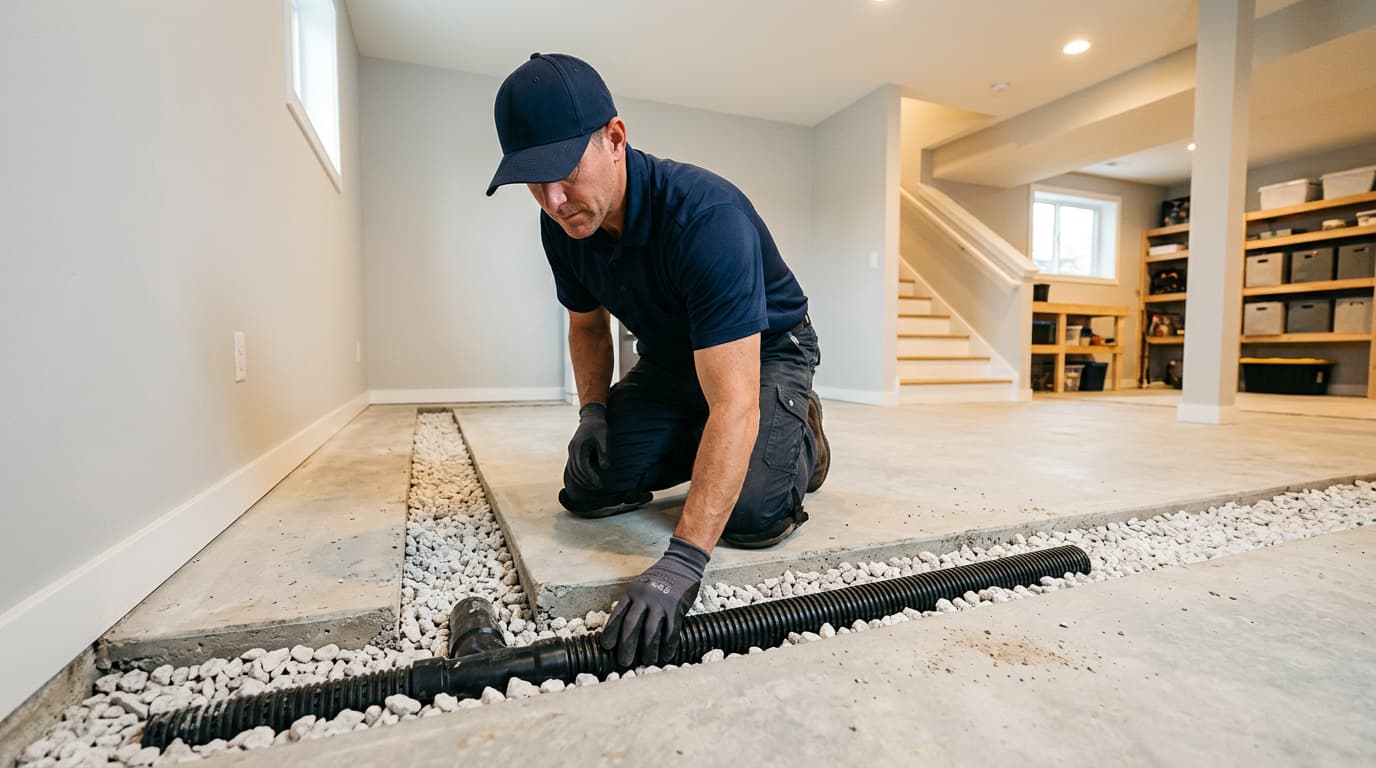
An interior system runs beneath the basement floor along the perimeter, right where the floor slab meets the wall. A channel is cut in the concrete, the perforated pipe is set in gravel below the slab, and the floor is patched over it. Water that enters through the wall or pushes up at the floor joint drops into the channel, travels to a sump pit, and the pump lifts it out and away from the house.
The wall still gets wet. That is the honest description of how this system works. What changes is that the water has a designated path out instead of collecting on the floor or soaking into whatever is stored down there. For a basement that stays dry all year except for a week after heavy May rain, an interior system solves the problem the homeowner actually has.
The practical advantages are real. The work happens indoors, so the yard, the landscaping, the patio and the driveway all stay untouched. The job typically runs one to two days. Weather does not delay it. And the system works the same whether the lot is flat or sloped, because the sump pump provides the lift that gravity cannot.
Which One Fits a Wichita Home
Exterior makes sense when the foundation is already being excavated for another reason, when the wall itself needs repair or sealing from the outside, or when the home is new enough that landscaping has not filled in around the perimeter. If a crew is already opening the ground for pier work or wall repair, adding the drain while the trench is open is the efficient moment to do it.
Interior makes sense for most existing Wichita homes with an established yard. The wall is sound, the problem is water showing up in the basement after wet weather, and the homeowner would rather not lose a row of mature shrubs and a section of patio to fix it. This is the common case, and it is why interior systems are what most contractors here recommend by default.
There is a third answer that gets overlooked. Sometimes neither system is the right first move. If the grade slopes toward the house or downspouts dump beside the foundation, fixing those sends less water to the wall in the first place and may resolve a mild basement issue without cutting concrete or digging a perimeter. A good drainage assessment checks the surface conditions before recommending a below-grade system.
Why Wichita's Soil Shapes the Decision
Residential building code requires a drain around foundations that retain earth and enclose living space below grade, with one notable exception: the drain is not required when the foundation sits on well-drained ground or clean sand and gravel soil. Sedgwick County clay, classified by the USDA as Hydrologic Group D with the slowest infiltration rate in the federal system, does not come close to that exemption. Wichita basements are exactly the condition the drainage requirement was written for.
The clay also affects how each system performs. Because water moves through this soil so slowly, it tends to sit against the foundation for days after a storm rather than draining past. An exterior drain intercepts it during that long contact window, which is when it does the most good. An interior drain handles whatever makes it through, and in Wichita that volume can be higher than in faster-draining regions. The sump pump in a Wichita home works harder than the same pump in sandy soil, which is why pump sizing and a backup power plan matter more here.
Winter adds a detail most homeowners never think about until it bites them. The Wichita-Sedgwick County building code sets the local frost depth at 24 inches, which is why exterior footings here have to be placed at least that deep. That same 24 inches matters to an interior system, because the sump pump discharge line runs outside. A discharge buried shallower than the frost line can freeze solid during a January cold snap, and a pump with nowhere to send water is a pump that backs up into the basement it was installed to protect.
Rainfall timing puts a point on it. Wichita averages about 36 inches of rain per year, with June regularly bringing more than four inches, much of it in heavy bursts. A basement that handles ordinary weather fine can still take on water during those events, which is the pattern most homeowners describe when they finally call.
FREQUENTLY ASKED QUESTIONS
Does an interior French drain always need a sump pump?
Almost always in Wichita. The pipe sits below the basement floor, which means the water it collects is lower than anywhere it could drain to by gravity on a flat lot. A pump provides the lift. The rare exception is a walkout basement or a home on enough slope that the pipe can daylight downhill, which is uncommon in most Wichita neighborhoods.
Can I have both systems?
Yes, and some homes do, usually because an exterior drain was installed with the original construction and an interior system was added later when the exterior one stopped keeping up. They do not conflict. The exterior drain reduces how much water reaches the wall and the interior system catches what still gets through. It is a belt-and-suspenders approach that makes sense for homes with persistent water problems.
How do I know if my home already has an exterior footing drain?
Look for a cleanout access or a discharge outlet at a low point of the yard. Original construction drawings, if you have them, will show it. Homes built before drainage requirements were common may have nothing, and homes built with a drain may have one that silted shut decades ago. An inspection can often tell from the symptoms inside whether a functioning exterior drain is present.
Will an interior system damage my basement floor?
The perimeter of the floor is cut and removed to install the channel, then patched with new concrete. The patch line stays visible along the wall edge. If the basement is finished, the bottom of the wall covering has to come off and go back. Most homeowners who are dealing with water in an unfinished basement consider the patch line an easy trade.
Which system lasts longer?
Both last decades when built correctly. The difference is what fails. An exterior drain fails silently when the gravel silts up or the filter fabric clogs, and you cannot inspect or service it without digging. An interior system fails visibly and its components stay reachable, with the sump pump being the part that needs replacement every several years. Serviceability is a real advantage of the interior approach.
When to Consult a Professional in Wichita
If water is showing up in your basement after rain, the useful question is not which system you want. It is where the water is entering, how much of it there is, and whether surface corrections could reduce the problem before anything gets cut or excavated. Those answers come from walking the lot and looking at the basement, and they determine which of the two systems, or neither, is the right call.
Chief Cornerstone Foundation has installed both systems in enough Wichita homes to know when the yard needs to come up and when it does not. Schedule a drainage assessment or call us at (316) 365-0032 and we will tell you which approach your basement actually needs.
Same Pipe. Same Gravel. Different Side of the Wall.
For most Wichita homes with an established yard and a sound foundation wall, the interior system is the practical answer: faster, less disruptive, serviceable, and effective against the water that actually shows up in the basement. The exterior drain is the better engineering answer when the wall needs outside attention anyway or when the ground is already open. Both are legitimate. What separates a good decision from an expensive one is knowing which problem you are solving before the first cut is made.